




The Clock That Never Stops
Let’s get the first big difference out of the way. In baseball, the clock is irrelevant. A game is measured in innings and outs, not minutes. It could last two hours or five. In soccer, the clock is king. A regulation match consists of two 45-minute halves.
And during each half, the clock runs continuously. It doesn’t stop for a foul, a ball out of bounds, or even a player getting treatment on the field. Think of it as the complete opposite of baseball’s rhythm. Baseball is a collection of distinct moments: the wind-up, the pitch, the swing, the pause. The time between those moments doesn’t officially 'count.' Soccer, by design, is about constant flow. The running clock is the first and most important rule to enforce that sense of perpetual motion. It’s designed to keep the game moving and maintain a baseline of action.
So, What Is 'Stoppage Time'?
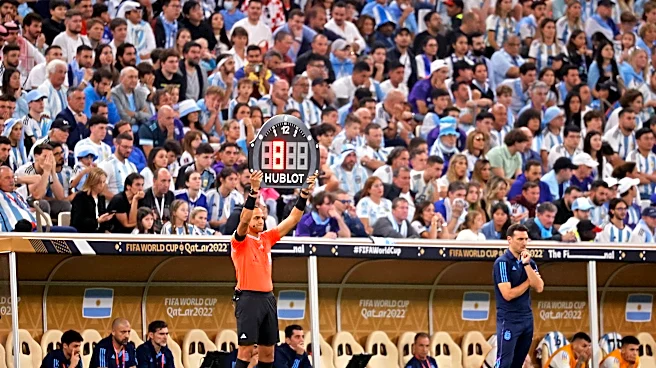
This is the source of all confusion, but the concept is surprisingly simple. That time you see added at the end of each half—officially called 'added time' or 'stoppage time'—isn’t bonus time. It’s *recovered* time. The referee is responsible for mentally logging all the little delays that happen during the 45-minute half. Every time a player is substituted, a goal is celebrated, an injury requires attention, or a video review (VAR) takes place, the referee is keeping a running tally. Instead of stopping and starting the clock for these minor interruptions, they let it run and then add the accumulated lost time back at the very end. Imagine if, in baseball, an umpire timed every mound visit, every batter’s walk-up music, and every slow trot around the bases after a home run, then declared, 'Okay, we’re adding three minutes and 45 seconds of baseball to the end of the 9th inning.' That’s functionally what soccer does.
Who Decides, and Is It Arbitrary?
It might look like a random number, but it’s a calculated decision made by the center referee. They are the sole official timekeeper of the match. The big stadium clock you see is technically unofficial; a courtesy to the fans and players. The referee's watch is the only one that matters. At the end of the half, the referee signals the 'fourth official'—the person on the sideline with the electronic board—how many minutes to add. While it feels like a judgment call, it’s based on a loose formula: roughly 30 seconds for a substitution, a minute for an injury, and a minute or more for a lengthy VAR review or a goal celebration. It’s not precise to the second, which is where the art and authority of the referee come in. It’s less like an umpire calling balls and strikes and more like them deciding when a rain delay is officially over. They have guidelines, but ultimately, their word is final.
Why Not Just Stop the Clock?
This is the question every American asks, and it gets to the heart of soccer’s global culture. The simple answer is philosophy: soccer prizes uninterrupted flow above all else. A stop-start clock would fundamentally change the feel of the game, introducing a staccato rhythm that fans of the sport don't want. It would encourage players to waste time in different ways and break the organic build-up of tension. The more cynical, and perhaps more accurate, answer involves commercials. A running clock makes it very difficult to insert commercial breaks, unlike the natural pauses in football and baseball. Many international fans view this as a feature, not a bug. It keeps the focus purely on the sport, creating a 45-minute commercial-free block of action. Preserving that experience is a core part of soccer's identity, and the running clock is the mechanism that protects it.