



The Rarest of Stages
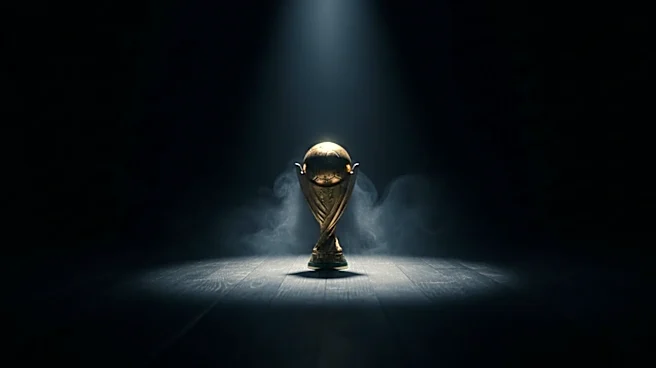
First, consider the scarcity. Club soccer offers a weekly dose of tribal loyalty, but the World Cup comes only once every four years. This rarity elevates everything. For most players, it’s a once-in-a-lifetime opportunity to represent their entire nation
on the biggest stage imaginable. There is no higher honor in the sport. Peruvian player Luis Advincula said it best before a match at Russia 2018: “You're representing your country, your people at the World Cup. The emotion takes over you.”. This isn’t just another game; it's the culmination of a life's work and the hopes of millions compressed into a 90-minute drama. That weight of expectation and pride is palpable before a single ball is kicked.
When ‘I’ Becomes ‘We’
For fans and players alike, the tournament triggers a powerful psychological shift. Social identity theory suggests we define ourselves partly through the groups we belong to, and during the Cup, national identity is front and center.. As University of Alabama professor Dr. John Vincent notes, for that brief moment, “the 'I' becomes a 'we'.”. This isn't just about cheering for a team; it's about participating in a collective ritual. The anthem becomes a tool to forge that bond, turning a stadium of strangers and a nation of viewers into a unified chorus. Seeing a player like Mexico's Gilberto Mora or legends like Cristiano Ronaldo and Lionel Messi moved to tears during their anthems creates a powerful connection.. Fans see the same pride they feel reflected in their heroes, confirming that everyone is in this together.
A Global Language of Pride
For many countries, soccer isn’t just a sport—it's a primary vehicle for national expression and global recognition.. While American sports fans have the NFL, NBA, and MLB for domestic obsession, much of the world pours its national sporting identity into the beautiful game. Success on the pitch can give smaller countries a visibility they're otherwise denied in global politics and economics.. The anthem is the opening statement in this symbolic battle. It’s a moment where a nation’s history, struggles, and aspirations are put on display.. Take the Italian team, famous for belting out their anthem with unmatched ferocity. It’s a ritual that binds them together, a display of unity and passion that psychs them up and signals their intent to the world..
The Sound of Defiant Unity
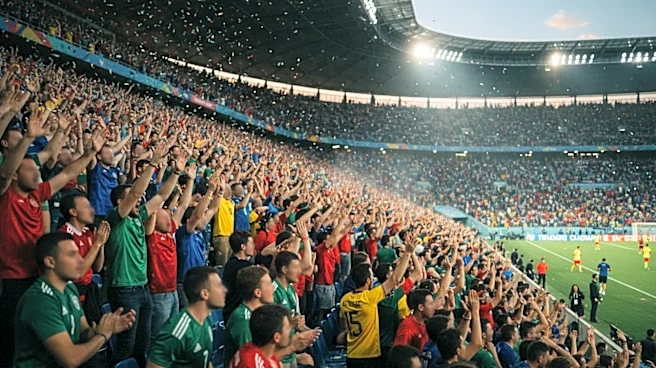
The sound itself is a critical part of the experience. It's not just a song; it's an act of collective will. This was never more apparent than during the 2014 World Cup in Brazil. FIFA had a rule that anthems couldn't exceed 90 seconds, so they would cut the music off mid-song.. In response, the Brazilian players and the entire stadium would continue singing, a cappella, in a thunderous display of passionate defiance.. This spontaneous act of unity, of finishing the song together without musical accompaniment, created moments far more powerful than any sanitized pre-game ceremony ever could.. It showed that the anthem doesn't belong to the organizers; it belongs to the people. The sound of tens of thousands of voices singing as one is a visceral reminder of community, and that's why many World Cup songs are produced to sound like a crowd, not a soloist..
Directed for Maximum Drama
Finally, we can’t ignore the role of television. Broadcasters understand the power of these moments and frame them for maximum emotional impact. The slow-motion close-up on a player with a single tear rolling down their cheek is a staple of the World Cup narrative.. FIFA itself has leaned into this, redesigning the anthem ceremony for the 2026 World Cup to involve the entire squad in the center circle, aiming to create “a moment of unity, pride and emotion.”. This deliberate production choice transforms a simple song into the opening scene of an epic drama, establishing the characters, the stakes, and the deep emotional currents that define the tournament.