









The Unseen Test of Quality
The single most revealing detail about a statement necklace’s craftsmanship is hidden in plain sight: the back. While we’re naturally drawn to the glittering stones and intricate designs on the front, jewelers and savvy shoppers know that the true story
of quality is told on the side that rests against your skin. Think about it from a manufacturer's perspective. When producing jewelry quickly and cheaply, every corner that can be cut, will be. The most obvious place to save time and money is on the parts no one is supposed to see. A rough, unfinished back, sloppy glue marks, or open-backed settings are all red flags. Conversely, a piece that is just as clean, polished, and thoughtfully constructed on the reverse shows a commitment to quality that extends beyond surface-level appeal. It signifies that the creator cared about the entire object, its durability, and the wearer's comfort.
Examine the Clasp and Connections
Start your inspection at the clasp. This is the functional heart of any necklace, and its quality is a direct indicator of the piece's intended lifespan. Cheap necklaces often use flimsy, lightweight lobster claws or simple spring rings made from base metals that can easily bend, break, or tarnish, staining your skin. A thoughtfully crafted piece will feature a clasp that feels substantial. Look for integrated clasps that are part of the design, elegant S-hooks, sturdy and decorative toggle clasps, or secure box clasps. The weight and action matter—does it click satisfyingly into place? Does it feel secure? Beyond the clasp, look at how the elements of the necklace are connected. Are the jump rings (the small circles connecting parts) soldered shut for security, or are they simply bent closed with a visible gap, waiting to snag a sweater or pull apart? Soldered joints are a hallmark of better construction.
Inspect the Settings from Behind
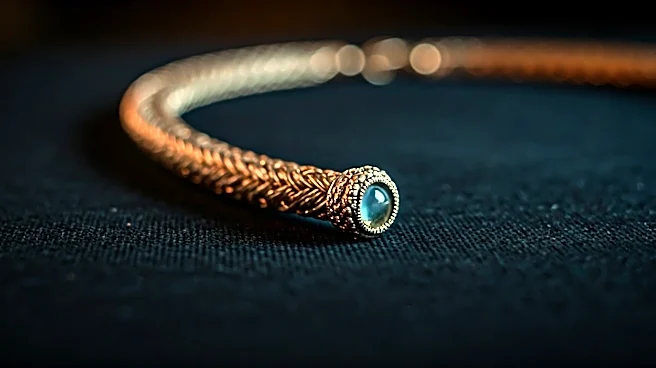
Now, turn your attention to the main event: the stones and decorative elements. From the front, a crystal might look dazzling, but the back reveals how it’s being held in place. The enemy of quality here is glue. If you flip a piece over and see yellowish, messy, or obvious adhesive, put it down. Glue is a shortcut that will eventually fail, especially when exposed to skin oils, lotions, or cleaning. Instead, look for mechanical settings. Are the stones held by prongs that are neatly finished and uniform? Is there a bezel (a thin metal rim) that wraps cleanly around the gem? On a high-quality piece, the back of these settings will be smooth and unobtrusive. This method is not only far more secure, but it also allows more light to interact with the stone, enhancing its brilliance. A clean, open-backed but secure setting is often a sign of good design, while a fully closed, polished backplate can signify a high-end finish.
Feel the Finish and Heft
Finally, use your sense of touch. A well-crafted statement necklace should feel as good as it looks. Run your fingers along the back. It should be smooth, with no sharp edges, burrs, or scratchy parts that could irritate your skin or damage your clothes. This smoothness, known as the “finish,” is the result of meticulous polishing and tumbling—steps that are often skipped in mass production. The weight of the piece, or its “heft,” is another clue. While you don’t want a necklace that’s uncomfortably heavy, a piece with a bit of weight often indicates the use of solid materials rather than hollow components or cheap, lightweight alloys plated to look like something they’re not. It feels substantial and valuable because it is.