







A Long and Winding Road
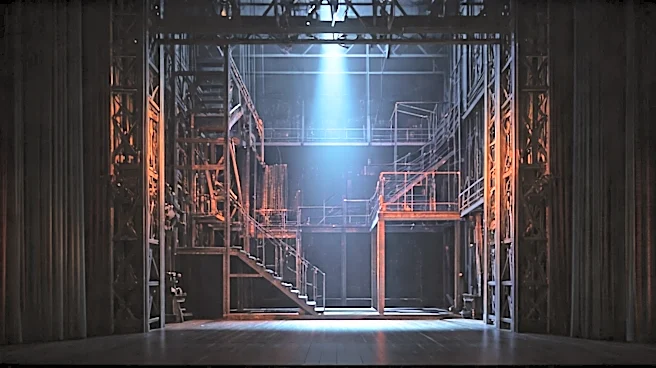
The story of Hadestown is one of slow, patient creation. Anaïs Mitchell, a folk singer-songwriter, began the project in 2006 as a DIY community theater show in Vermont. It was a sung-through folk opera, raw and poetic. Over the next decade, it evolved
into a celebrated 2010 concept album and then an Off-Broadway hit at New York Theatre Workshop in 2016, where Mitchell partnered with visionary director Rachel Chavkin. Each step brought the story of Orpheus and Eurydice into sharper focus, but the show’s journey from a scrappy, intimate concert to a full-blown Broadway spectacle was far from over.
The London Stumble
The headline's "previews" crisis largely points to the 2018 run at London's prestigious National Theatre. This was the show's pre-Broadway tryout, a high-stakes production meant to finalize the musical for its leap to New York. While not a commercial flop, the London version received a mixed critical reception that identified serious problems. Reviewers found the central love story between Orpheus and Eurydice unconvincing and emotionally flat. Reeve Carney's Orpheus was described as a "bland, toothy" character who was difficult to root for, leaving the narrative heart of the show feeling cold despite the gorgeous music. The plot felt repetitive and lacked momentum, particularly in the second act.
An Underworld Overhaul
The feedback from London was a crucial wake-up call. Instead of shipping the show directly to Broadway, Mitchell and Chavkin undertook a significant rewrite. The core issue was clarity and emotional weight. Audiences and critics weren't connecting with Orpheus or understanding Eurydice's desperate choice to go to Hadestown. In the gap between the London closing and Broadway previews, new material was written to deepen the characters. The creative team reworked lyrics and dialogue to make the story more active and the stakes more personal. For example, they restructured the ending of Act I, debating whether to close with the show-stopper "Wait for Me" or the ominous "Why We Build the Wall," a decision that dramatically alters the intermission energy.
Saving the Songbird
The character of Orpheus received the most significant changes. In London, he came across as airily composing his masterpiece while Eurydice starved, making him seem naive and unsympathetic. For Broadway, his character was adjusted to be less self-involved and more focused on a collective vision, a musician trying to bring the world back into tune. This recalibration was essential. If the audience didn't believe in Orpheus's love and his song, the entire climax where he must charm the King of the Underworld would fall flat. The changes aimed to ensure that when Orpheus sings "Epic III," it feels like a desperate, world-changing plea, not just a pretty tune. Mitchell continued revising lyrics right up until the Broadway opening, a process she documented in her book "Working on a Song."
A Road to Triumph
When Hadestown opened at the Walter Kerr Theatre in April 2019, the results of the overhaul were undeniable. The show was met with rapturous reviews and became a cultural phenomenon, culminating in 14 Tony nominations and eight wins, including Best Musical and Best Original Score. The once-flagging love story now resonated powerfully, and the characters' journeys felt earned and devastating. The crisis in London wasn't a sign of failure but a necessary crucible. It forced the creators to confront what wasn't working and transform a beautiful but flawed show into the masterpiece audiences know today.