







We've Already Said Goodbye—Twice
Let’s be honest: Toy Story 3 delivered one of the most emotionally complete endings in cinematic history. Andy, heading off to college, passed his cherished friends to Bonnie. It was a poignant, tear-jerking metaphor for growing up and letting go. We
watched him drive away, and it felt final. Then came Toy Story 4, which, against all odds, found a new, meaningful conclusion. Woody, realizing his time as a child's primary toy was over, chose a different path—a life of freedom with Bo Peep, helping lost toys find new kids. Buzz’s respectful, heartfelt “To infinity… and beyond” was a farewell between brothers. These weren’t just endings; they were perfect statements on purpose, change, and the passage of time. For a fifth film to work, it can’t simply pretend these goodbyes didn’t happen. It must start by acknowledging that the core emotional arc for its original audience is, for all intents and purposes, resolved. The primary narrative function of Woody and Buzz, as we knew them, is complete. Ignoring this would feel cheap and undermine the weight of the entire saga.
A World Without a Toy Box
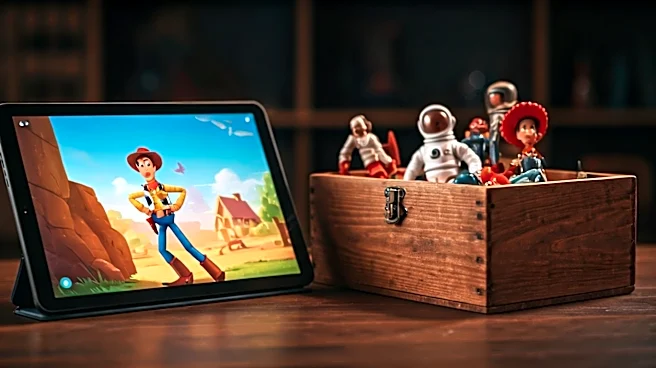
The central premise of Toy Story hinges on a child’s imagination animating their physical playthings. But the children of today—Gen Alpha, born roughly between 2010 and 2024—live in a radically different world. Their “toy box” is often an iPad. Their “play” is building worlds in Roblox and Minecraft, watching YouTube shorts, and communicating through Discord. A pull-string cowboy doll and a plastic space ranger with karate-chop action feel like artifacts from a bygone era. The fundamental conflict of Toy Story—the fear of being replaced by a shinier, newer toy—seems almost quaint. Today’s threat isn’t a Buzz Lightyear; it’s a five-minute-crafts video on TikTok or a new season of a Netflix show. The very concept of deep, imaginative, analog play with a single favorite toy is no longer a universal childhood experience. Toy Story 5 can’t just rehash old themes. It must confront this new reality head-on. What is a toy’s role in a world dominated by digital, ephemeral entertainment?
The New Mission: Redefining 'Play'
This is the core task for Toy Story 5. It has to give Woody and Buzz a new reason to exist in this modern landscape. Perhaps the film’s central theme shouldn't be about being *played with* but about the nature of *play itself*. In a digital world, a physical toy offers something unique: permanence. It’s a tangible link to memory and imagination that a deleted app or an outdated game console can’t provide. The film could explore Woody, the ultimate analog hero, grappling with a world where kids create their own digital avatars instead of imprinting personalities onto dolls. Buzz, the technologically advanced toy, might find his buttons and lasers hopelessly outdated compared to an interactive tablet. Their new purpose could be to champion a different kind of connection—one that’s tactile, personal, and not mediated by a screen. Instead of just wanting to be a child’s favorite, their mission might be to remind kids (and parents) of the power of unplugged, imaginative creativity. It’s a way for the characters to evolve beyond their original programming, both literally and thematically.
More Than a Millennial Victory Lap
Disney knows that Millennials and older Gen Z will show up for Toy Story 5 out of sheer nostalgia. The box office is almost guaranteed. But if the film is just a collection of familiar catchphrases and winks to the original audience, it will be a creative failure. It cannot be a victory lap. It must be a genuine attempt to connect with today’s children on their own terms. The genius of the first film was that it spoke a universal language about childhood fears and friendships. The new film must find that same universality within a new cultural context. The greatest success for Toy Story 5 wouldn’t be making 30-somethings cry again. It would be making a seven-year-old put down their tablet and see their own dusty, forgotten action figures in a new light. It has to earn the love of Gen Alpha, not just rent it from their parents. Balancing the deep legacy of these beloved characters with the need for a fresh, relevant story is a tightrope walk few franchises ever manage.