








The Foundational, Billion-Dollar Price Tag
For organizers like FIFA and host nations, security isn't just another expense; it's the bedrock upon which the entire commercial structure is built. Without a convincing security plan, broadcasters won't sign billion-dollar deals, top-tier sponsors like Coca-Cola
and Visa won't commit their marketing budgets, and fans won't buy tickets. It's the ultimate prerequisite. The numbers are staggering. Brazil reportedly spent nearly $1 billion on security for the 2014 World Cup. For the 2022 World Cup, Qatar's security budget was an integrated part of its overall infrastructure spending, estimated in the many billions, involving everything from stadium security to fighter jets. This spending isn't an optional add-on; it's the price of admission to the mega-event game. It often becomes the largest single operational cost, dwarfing even the construction of some smaller venues.
From Hooliganism to Cyber Threats
What does that money actually buy? The image of police officers in high-visibility jackets is just the tip of the iceberg. Modern tournament security is a multi-layered operation designed to counter a complex matrix of threats. The traditional concern of hooliganism, while still relevant, is now just one piece of the puzzle. The primary driver of today's costs is counter-terrorism. This involves extensive intelligence sharing between nations, surveillance technology, and rapid-response tactical units on standby. Then there's cybersecurity. With ticketing, accreditation, and communications all digitized, protecting these systems from hackers is paramount. A breach could cause chaos, invalidate thousands of tickets, or compromise sensitive data. Finally, there's the enormous logistical challenge of crowd management and VIP protection, requiring sophisticated command-and-control centers to monitor dozens of sites—stadiums, fan zones, transport hubs, and team hotels—simultaneously.
Who Really Foots the Bill?
This is where the business story gets complicated. While FIFA generates immense revenue from a World Cup—over $7.5 billion for the Qatar 2022 cycle—it offloads the vast majority of operational and security costs onto the host nation. For host governments, this becomes a massive public expenditure. The promise is that a safe, successful tournament will generate tourism, boost the national brand, and lead to long-term economic benefits. However, the upfront cost is immense and borne by taxpayers. This creates a high-stakes financial gamble. If a country overspends on security or fails to realize the projected economic windfall, the tournament can become a net financial loss for the public, leaving behind debt and underused infrastructure. This fiscal pressure is a major reason why fewer countries are bidding to host mega-events alone, leading to more joint bids to share the burden.
The 2026 North American Challenge
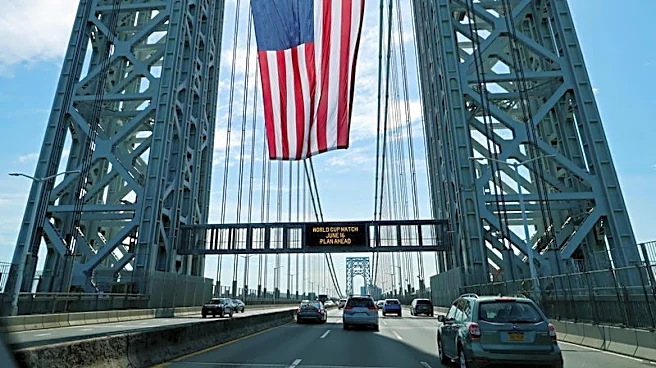
The upcoming 2026 World Cup, hosted across the U.S., Canada, and Mexico, presents an unprecedented security challenge. Instead of operating within a single nation's jurisdiction, organizers must coordinate security protocols across three different countries, dozens of federal and state agencies, and 16 host cities. The geographic spread—from Vancouver to Mexico City to Boston—is enormous. This decentralization multiplies the complexity. Each city has its own police force, emergency services, and threat profile. Coordinating intelligence, standardizing procedures, and managing cross-border travel for millions of fans will require an unparalleled level of cooperation. For the U.S. in particular, which will host the majority of the matches, the event will be classified as a National Special Security Event (NSSE), putting the Secret Service in charge of a massive, multi-agency operation. The final security bill for 2026 will almost certainly set a new record, fundamentally shaping the tournament’s operational and business success.