
From 'Who Are You Wearing?' to 'What Does It Mean?'
For decades, the most important question on any red carpet was “Who are you wearing?” It was a straightforward query reinforcing a simple ecosystem: designers lent dresses to stars for exposure, and stars got
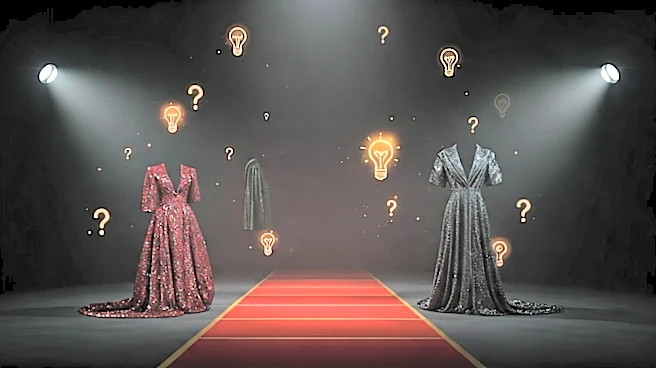
to look fabulous. The currency was glamour, and the conversation was controlled by fashion houses and legacy media. But the internet, and specifically the rise of hyper-engaged online fandoms, has fundamentally changed the game. The question is no longer just about the designer; it’s about the narrative. A dress isn’t just a dress anymore. It might be a coded message, a subtle nod to a future project, or a direct response to a theory bubbling up on TikTok or X (formerly Twitter). This shift transforms the red carpet from a passive showcase into an active storytelling platform, and awards shows like the AMAs are its primary stage.
The Taylor Swift Blueprint
You can’t discuss this phenomenon without talking about its grandmaster, Taylor Swift. She has turned weaving narrative clues—or “Easter eggs”—into her personal brand. While she didn't attend the most recent AMAs, her past appearances and overall strategy provide the perfect blueprint. Consider her sparkling, gold catsuit at the 2022 AMAs. On the surface, it was a stunning look from The Blonds. To her fans, it was a clear reference to the golden, starry aesthetic of her *Midnights* album, a victory lap for a record-breaking era. When she wears snake motifs, the fandom instantly connects it to her *Reputation* album. A particular shade of purple sends whispers of a *Speak Now (Taylor's Version)* announcement. Swift and her stylist, Joseph Cassell Falconer, have conditioned millions of people to look past the fabric and search for the subtext. They’ve proven that an outfit can generate more online discussion and media coverage than a traditional press release ever could.
The Economics of an Easter Egg
This isn't just a fun game between artists and their fans; it’s a sophisticated marketing strategy. In an oversaturated media landscape, getting and holding attention is the most valuable commodity. A beautiful but silent gown might get featured on a best-dressed list. An outfit that seems to confirm a fan theory about a new album, however, can dominate social media algorithms for days. It creates a feedback loop of excitement: fans feel rewarded for their deep knowledge, their detective work gets amplified by media outlets hungry for a clickable angle, and the artist’s project receives a wave of organic, high-intensity promotion. This “styling currency” is incredibly valuable. It deepens fan loyalty by making them feel like insiders, and it gives stylists a powerful new tool. The goal is no longer just to make a client look good, but to make them part of a larger, more engaging conversation.
The Trend Goes Mainstream
While Swift may be the most prominent example, she’s far from the only one. The strategy is being adopted across the music industry. Olivia Rodrigo masterfully uses fashion to evoke the '90s and early-2000s pop-punk and grunge aesthetics that influence her music, giving her entire persona a cohesive, time-traveling feel. On the K-pop scene, groups like BTS and Blackpink have long used meticulously coordinated outfits to signal album concepts, storyline shifts in their music videos, and individual member roles. For these global superstars, fashion is an essential part of the intricate world-building that captivates their massive fanbases. When Doja Cat appeared at an awards show with a look referencing Schiaparelli’s surrealist anatomy-inspired designs, it wasn’t just a weird outfit; it was a statement aligned with her provocative and artistically challenging public image. The message is clear: in modern pop, the clothes are part of the art.