





The First Whistle as National Rebirth
Few moments illustrate this better than the opening match of the 1995 Rugby World Cup in South Africa. The nation was just emerging from the shadows of apartheid, a system that had made it a global pariah. For decades, the Springboks rugby team, with
its green and gold, was a hated symbol of white minority rule for many Black South Africans. When South Africa was chosen to host the tournament, it was more than a sporting event; it was a test of a fragile new democracy. The opening match at Cape Town's Newlands Stadium against defending champions Australia was the first act. President Nelson Mandela, who had been imprisoned for 27 years, actively campaigned for all South Africans to embrace the team. When the Springboks pulled off an upset victory, it sent a shockwave of belief through the country. That first win set the tone for a tournament that would end with Mandela, wearing a Springbok jersey, handing the trophy to captain Francois Pienaar. The stadium became the starting point of a narrative of reconciliation, its legacy forever tied to that initial, unifying roar.
A Continent's Coming-Out Party
Fifteen years later, another opening match in South Africa had a different, but equally symbolic, weight. The 2010 FIFA World Cup was the first ever held on African soil, a moment of immense continental pride. All eyes were on Soccer City stadium in Johannesburg, a venue designed to look like a calabash, or African pot, explicitly chosen to be a recognizable symbol of the continent. Before the first game, the stadium was already a landmark, having hosted Nelson Mandela's first speech after his release from prison in 1990. But the opening match against Mexico consecrated it as a cathedral of African football. Just after halftime, Siphiwe Tshabalala scored a thunderous goal for South Africa, unleashing a euphoric celebration that reverberated across the globe. Though the match ended in a 1-1 draw, that goal was a declaration. It announced that Africa was not just hosting, but was ready to shine on the world's biggest stage. Soccer City became a symbol of that arrival, its arching form synonymous with a moment of pure, unadulterated joy and possibility.
When Home Soil Becomes a Fortress
Sometimes, an opening match serves to fuse a nation’s ambition with a specific place. In 1998, France hosted the World Cup for the first time in 60 years. The brand-new Stade de France, built for the tournament in the Parisian suburb of Saint-Denis, was a modern marvel waiting for a soul. The opening fixture pitted the hosts against South Africa. France dominated the match, winning 3-0 in a performance that signaled their intent. Led by the masterful Zinedine Zidane, that first victory ignited a national fervor that carried the team all the way to the final, where they would defeat Brazil in the very same stadium. The Stade de France wasn't just where the tournament began and ended; it became the physical embodiment of France’s multicultural team and their unexpected, glorious triumph. That first win was the spark, transforming an expensive piece of infrastructure into a fortress of national pride and a symbol of a new, victorious French identity.
The Power of the First Story
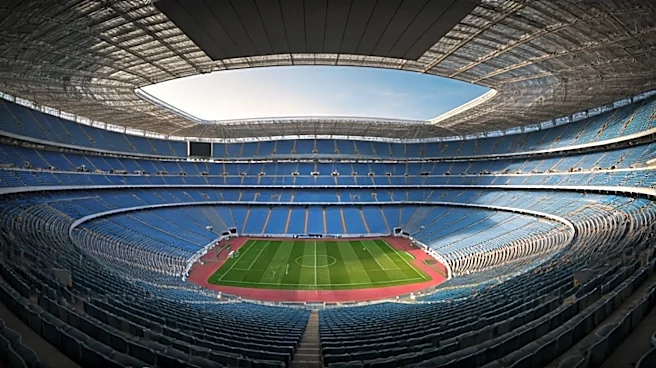
Ultimately, the opening match has a unique power because it writes the first chapter in a stadium's public story. It’s a moment of intense focus, where the hopes of a host nation, the pressure of a global audience, and the drama of sport all converge in one place. While many games will follow, the opener sets the tone and provides the first indelible memory that anchors the venue in public consciousness. Whether it’s a display of national unity, a statement of arrival, or the start of an improbable championship run, the first 90 minutes of a major tournament can infuse a stadium with a meaning that lasts long after the floodlights are turned off. The concrete and turf become vessels for a story, and that story often begins the moment the first whistle blows.