










The Rules of the Tightrope
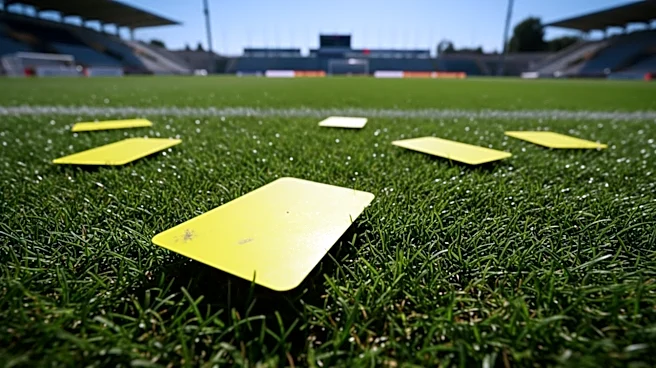
The basic math of tournament soccer is deceptively simple: get two yellow cards across different matches, and you’re suspended for the next game. In a short, high-stakes competition, losing a key player for even one match can be catastrophic. The challenge
for coaches isn’t just winning the game in front of them, but navigating the disciplinary minefield of the games to come. For the 2026 World Cup, with its expanded 48-team format, FIFA tweaked the rules to account for the longer path to the final. To prevent teams from being decimated by suspensions, the governing body instituted two amnesty periods: all single yellow cards are wiped clean after the group stage, and then again after the quarter-finals. This gives players a crucial reset, but the window of danger between those resets is where tournament plans can unravel. A player booked in the Round of 32 and again in the Round of 16 would still miss a massive quarter-final match.
A High-Stakes Game of Avoidance
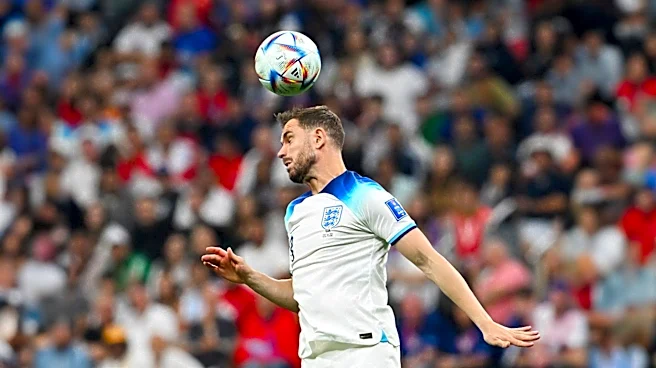
This disciplinary pressure was on full display during the just-completed quarter-final round of the 2026 World Cup. A staggering 19 players went into their matches knowing that a single mistimed tackle or moment of dissent would mean watching a potential semi-final from the sidelines. The list was a who's who of global stars: England’s midfield engine, Jude Bellingham and Declan Rice; Morocco’s dynamic leader, Achraf Hakimi; and French forward Michael Olise were all walking a suspension tightrope. Every fifty-fifty challenge, every tactical foul carried a double jeopardy. For their coaches, it presented a series of brutal questions. Do you substitute a star player to protect them? Do you instruct them to play more cautiously, potentially neutering their effectiveness? Thankfully for the likes of England, France, and Spain, their key men navigated the quarter-finals without picking up a suspension-triggering card, ensuring they are available for the final four. But the tension itself reshapes the game.
The Tears That Changed the Game
The rule that clears the slate before the semi-finals exists for a reason, and that reason is largely rooted in the tears of one man: Paul Gascoigne. During the 1990 World Cup semi-final, the brilliant English midfielder received a yellow card that he knew, in an instant, would rule him out of the final if his team advanced. The image of the inconsolable “Gazza” became an iconic, heartbreaking moment in soccer history. Germany’s Michael Ballack suffered a similar fate in 2002, scoring the goal that sent his team to the World Cup final but picking up a yellow card that forced him to miss the biggest game of his life. These moments felt contrary to the spirit of the game, punishing players for infractions committed weeks apart and robbing the final of its best performers. FIFA’s eventual solution—wiping the slate clean after the quarter-finals—was a direct response to this problem, ensuring the tournament’s showpiece match would not be weakened by the slow burn of accumulated cards.
The Other Hidden Impact
While suspensions are the most obvious threat, yellow cards have another, even more subtle way of derailing a tournament plan: as a tiebreaker. In the group stage, if two teams are perfectly equal on points, goal difference, and goals scored, the next tiebreaker is the “team conduct score.” Each yellow card carries a deduction of one point, while red cards carry steeper penalties. In an incredibly close group, a team can be eliminated simply because they collected one more yellow card than their rival. It rarely comes to this, but the possibility forces teams to consider discipline from the very first whistle of the tournament. A cynical foul to stop a counterattack or a card for arguing with the referee in a seemingly meaningless group game can, in the tightest of margins, be the very thing that sends a team home early.