








More Than Meets the Eye
When most people shop for a sapphire, they focus on two things: the richness of the blue and the brilliance of the sparkle. These are, without question, critical aspects of a sapphire's beauty. A vibrant, saturated color is the hallmark of a fine gem,
and a lively stone that plays with light is always more desirable than a dull or sleepy one. Jewelers grade these stones based on their hue, tone, and saturation, striving for a pure blue that’s not too dark or too light. This focus on color is why sapphires have been symbols of wisdom, loyalty, and nobility for centuries. But the most experienced gem cutters and connoisseurs know that the initial beauty of the rough stone is only half the story. The other half is revealed by the skill required to handle the gem's natural quirks.
The Secret Within: Color Zoning
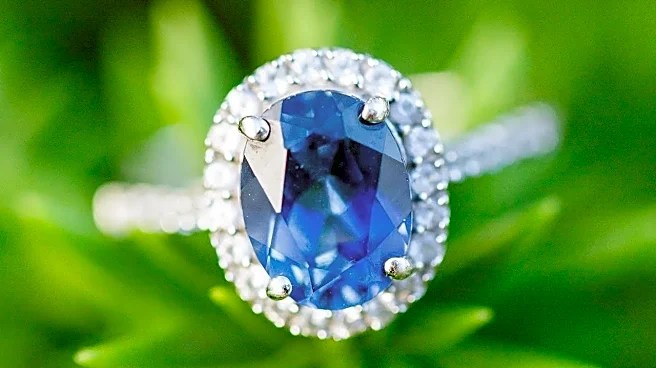
Unlike a bucket of paint, color in a natural sapphire is rarely perfectly uniform. Instead, it often forms in concentrated layers or angular patches, a result of how the crystal grew over millennia. This uneven distribution is known as color zoning. In a lesser-quality stone, this can manifest as distracting light patches, washed-out areas, or visible stripes that detract from the gem's overall beauty. Many buyers might see an uneven stone and simply pass, but a master craftsperson sees it not as a flaw, but as a challenge to be artfully managed.
Where Craftsmanship Makes the Difference
This is where true craftsmanship shines. A master cutter doesn't just cut a sapphire for maximum weight; they cut it for maximum beauty. When faced with a rough stone that has prominent color zoning, a skilled artisan will spend hours analyzing the crystal to orient the cut perfectly. Their goal is to position the facets in such a way that the color appears rich and even from the top-down, or 'face-up', view. An expert might strategically place the deepest area of color at the bottom tip of the gem (the culet), allowing that concentrated hue to reflect throughout the entire stone and create the illusion of uniform saturation. This technique transforms a potential imperfection into a key element of the gem's beauty. A poorly handled stone, by contrast, will have its zoning exposed, a telltale sign that the cutter prioritized size over artistry.
How to Train Your Eye
You don't have to be a gemologist to begin appreciating this detail. When looking at a sapphire, don't just admire its face-on color. Pick it up and tilt it from side to side under a good light source. Look at it from different angles. Does the color remain consistent and deep, or do you see distracting lighter areas or bands appear? A masterfully cut gem will hold its color beautifully, appearing uniform and vibrant from the angles it's most likely to be viewed. In contrast, a stone with poorly managed color zoning might reveal a 'window'—a washed-out, less brilliant area in the center—or show its stripes when viewed from an angle. Seeing this difference is the first step to understanding the immense skill that goes into creating a truly breathtaking gemstone.