



Your Brain on Laughter
The most powerful force at play is emotional contagion. Humans are social creatures, wired to mirror the emotions of those around them. When the person next to you bursts out laughing at a punchline, your brain subconsciously registers that cue. A chuckle
becomes a full-throated laugh. A teary-eyed sniffle gives you permission to feel the sadness of a scene more deeply. Psychologists have found that this effect turbocharges our feelings, making funny moments funnier and sad scenes sadder simply because we're experiencing them as a group. It's an automatic, powerful feedback loop. The sound of hundreds of people laughing, screaming, or crying in unison validates and amplifies your own reaction, turning a personal viewing into a communal event.
The Power of Social Proof
Beyond pure contagion, there's the concept of social proof: we look to others for cues on how to behave and what to value. When an entire theater erupts in applause after a heroic moment or gasps at a shocking twist, it sends a clear signal: “This is important. This is exciting.” This collective agreement confirms that your emotional investment is correct and shared. It’s the same reason a restaurant with a line out the door seems more appealing. In a theater, the crowd’s reaction acts as real-time social proof that the movie is landing as intended. This shared validation deepens our engagement, making us feel like part of a momentary community that's all on the same emotional wavelength.
When the Crowd Kills the Vibe
Of course, this sword has two edges. Crowd energy isn't always a positive force. A silent, unresponsive audience during a comedy can make every joke fall flat, creating an awkward vacuum where laughter should be. Your own smile might fade as you subconsciously register the lack of positive reinforcement. Worse, a disruptive crowd—people on their phones, talking loudly, or reacting inappropriately—can completely shatter the immersive experience. Instead of syncing up with the film's emotions, your attention is diverted, and irritation replaces engagement. The same psychological mechanisms that can enhance a film can just as easily ruin it, proving how crucial the right kind of crowd energy is.
The Unseen Architecture of Focus
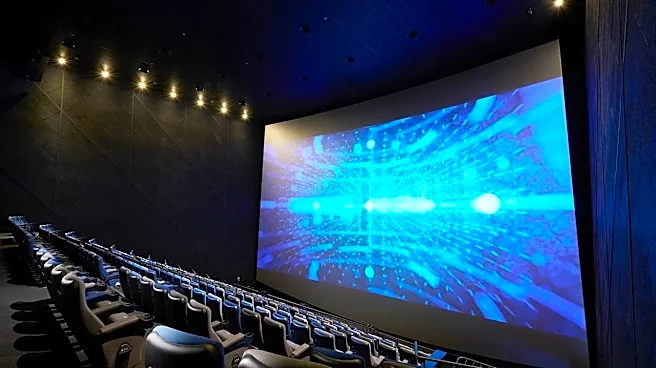
It’s not just the people; it's the place. A movie theater is an environment engineered for focused, shared experience. The darkness eliminates visual distractions, forcing your attention onto the massive screen. The surround-sound system envelops everyone in the same auditory world, ensuring key sound cues land with maximum impact. There are no phones to check (hopefully), no doorbells to answer, and no option to pause. This forced focus primes you to receive the film’s emotional beats without interruption. When you combine this distraction-free environment with the emotional contagion of the audience, you get a potent cocktail for a powerful cinematic experience that’s nearly impossible to replicate on your living room couch.