





Before the Mouse, There Was a Rabbit
To understand where Mickey came from, you first need to know about Oswald the Lucky Rabbit. In 1927, Walt Disney and his chief animator, Ub Iwerks, were hitting their stride. They had created Oswald for Universal Pictures, and the character was a genuine
sensation, rivaling other cartoon stars of the day like Felix the Cat. The success of the 26 Oswald shorts produced by Disney allowed his small studio to grow, employing a staff of nearly twenty and establishing him as a major player in animation. For all intents and purposes, Oswald was Disney's first big break, a character that proved his studio could deliver popular, quality entertainment.
A Devastating New York Betrayal
In early 1928, with Oswald's popularity soaring, Disney traveled to New York to negotiate a new, more favorable contract with his distributor, Charles Mintz. Believing he had the upper hand, Disney asked for a modest raise per cartoon. Mintz not only refused but delivered a stunning ultimatum: Disney would have to take a 20% budget cut. To twist the knife, Mintz revealed that he had secretly hired away most of Disney's animation staff and, more importantly, that Universal, not Disney, legally owned the rights to Oswald the Lucky Rabbit. The contract Disney had signed left him with no claim to his own creation. Mintz essentially planned to cut Disney out and produce the Oswald cartoons himself. Walt walked away, having lost his character, his staff, and his studio's main source of income.
The Secret Train Ride Home
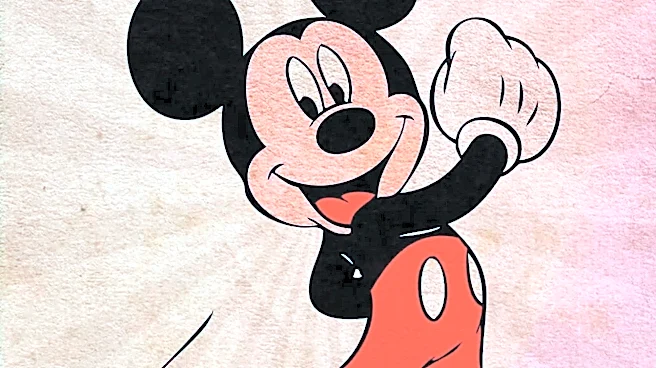
Devastated, Walt Disney began the long train journey back to California. But despair quickly turned into defiance. He realized the disastrous Oswald deal taught him a crucial lesson: he must own his creations outright. Legend holds that on this trip, he began sketching ideas for a new character, one that could replace Oswald and that he would control completely. He needed something simple, expressive, and likable. He needed a mouse. The initial concept for this new character was born out of pure necessity, a creative Hail Mary in the face of professional ruin.
From Rabbit to Mouse in Record Time
Back in California, Disney and the fiercely loyal Ub Iwerks—one of the few animators who didn't defect to Mintz—got to work. The actual design for Mickey Mouse was, in many ways, a modification of Oswald. Iwerks, a famously fast animator, simply shortened the ears, rounded out the body, and tweaked the features. The process was a masterclass in creative efficiency. While it took "years" of building a business and learning a hard lesson to set the stage, the physical creation of Mickey was an act of desperation and genius that happened incredibly quickly. Initially named Mortimer Mouse, Walt's wife, Lillian, famously suggested the friendlier name "Mickey." The first cartoons, "Plane Crazy" and "The Gallopin' Gaucho," failed to find a distributor, but their third, "Steamboat Willie," with its groundbreaking synchronized sound, became an instant sensation in late 1928, launching an empire.