




The Cell Service Black Hole Is Real
Let's start with a hard truth: your phone is not as reliable as you think it is. Even with festivals installing temporary cell towers, the sheer number of people—some 75,000 attendees each day—all trying to upload stories, send texts, and find their friends
at the same time creates massive network congestion. Your phone might show full bars, but that text saying, "I'm by the stage with the lights," probably won't send for another two hours. Relying on digital communication in a sea of people is a rookie mistake that can lead to hours of frustrated wandering instead of enjoying the music you paid to see.
Your Vague Landmark Is Everyone's Vague Landmark
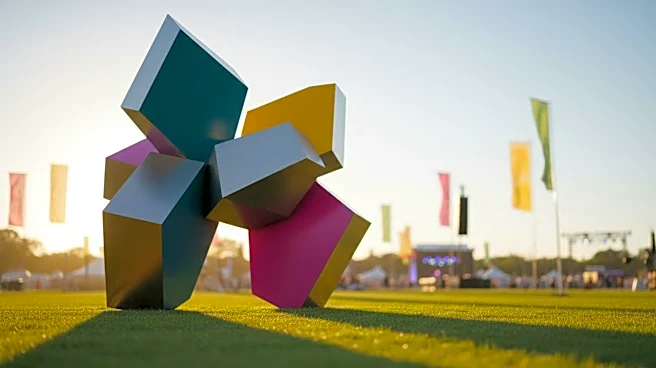
The classic fallback is the verbal meeting spot. "Let's meet by the big tree near the main stage!" It sounds simple enough, but Golden Gate Park is filled with big trees. And that easily identifiable sculpture or food stand? Hundreds of other groups have the exact same idea. Without extreme specificity, your meeting point becomes a chaotic search party. A successful plan requires a landmark that is unique, easy to find from a distance, and has a specific quadrant. "Meet at the back-left corner of the Beer Lands sign" is a plan. "Meet by the windmills" is a recipe for disaster.
How to Pick a Winning Spot
A perfect meeting point is memorable, well-lit at night, and slightly away from the main flow of human traffic. The official festival map, available on the Outside Lands app, is your best friend here. Look for intersections of paths, the edges of designated areas like Wine Lands or Cocktail Magic, or a less popular art installation. Your goal is to find a spot that your entire group can easily remember and locate, even in the dark and after a long day of dancing. Pro tip: once you pick it, take a group photo there on the first day to cement it in everyone's memory.
Embrace the Time-Stamp Protocol
Even with a great meeting spot, timing is everything. A veteran festival move is the time-stamped plan. This works in two ways. First, if you do send a text, add the time: "Heading to Sutro stage. 3:45 PM." That way, when the message finally arrives, your friends know if it's outdated. Second, establish time-based rules for meeting. For example: "If we get separated, we all meet back at the spot 15 minutes after the headliner's set ends." This eliminates ambiguity and ensures no one is left waiting for hours, wondering if they missed a text.
Make Yourselves Un-losable
The best way to find your group is to be findable. This is where festival creativity comes in. While elaborate totems can be cumbersome, a simple, consistent group element can be a lifesaver. Think matching hats, bandanas, or even a specific color of light-up accessory that you can all flash. When you're scanning a crowd of thousands, looking for a sea of familiar faces is impossible. But spotting a cluster of three matching neon green bucket hats? Suddenly, that's much easier. It turns a stressful search into a fun game of 'I Spy.'
The Buddy System Still Works
If your group is larger than four people, accept that you will split up. It's a festival law of nature. Instead of fighting it, lean into it. Use the buddy system. Pair off or form mini-groups of three. It's far easier for two people to stick together and navigate a crowd than it is for six. This way, if someone needs to peel off for a different set or a bathroom break, they have someone with them. This reduces the chances of anyone getting truly lost and makes regrouping at your main spot later much more manageable.