






Moana’s Journey Is About Duty and Identity, Not Romance
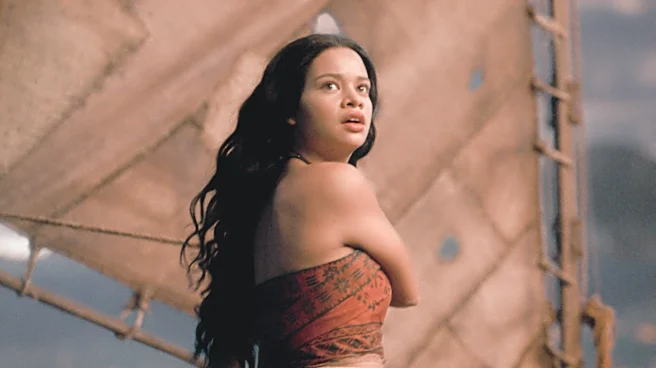
Unlike many Disney princess tales, Moana’s story isn't about finding a prince. She is the daughter of a chief, driven by a deep responsibility to her people and a personal calling to the ocean. When a mysterious blight begins to destroy her island of Motunui,
Moana defies her father's rules to sail beyond the reef, find the demigod Maui, and restore the heart of the goddess Te Fiti. The film is a powerful coming-of-age story focused on leadership, self-discovery, and bravery, establishing Moana as a heroine whose main quest is saving her world and finding her own place in it.
The Ocean Is a Living Character
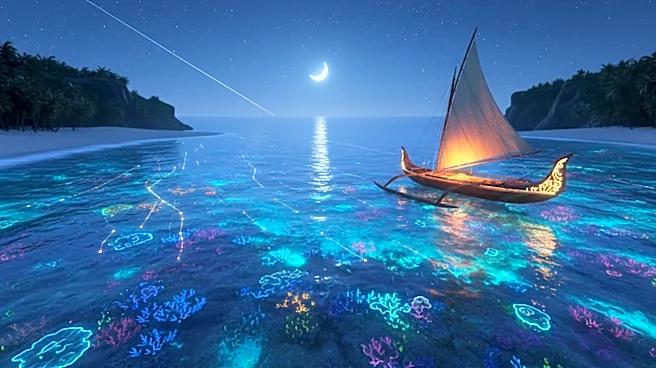
From the very beginning, the ocean plays an active role in Moana's life. It chooses her as a toddler to bear the heart of Te Fiti, playfully interacts with her, and guides her on her quest. This personification of nature is central to the film's mythology, acting as a gentle guardian and a powerful force. The animated visuals of the water were groundbreaking, and its characterization establishes a deep connection between Moana and the natural world she is fighting to protect. It’s more than just a setting; it's her first and most important ally.
Maui Is a Complicated Hero
Voiced with swagger by Dwayne Johnson, who reprises his role in the live-action film, Maui is a larger-than-life demigod of wind and sea. He’s known for his heroic deeds, chronicled by his animated tattoos, but also for his massive ego. He stole the heart of Te Fiti, which caused the film's central conflict, and initially sees Moana as a ticket to regaining his lost glory. However, his bravado hides a painful past of abandonment. His journey is one of redemption, learning that his worth isn't tied to his magical fishhook or the adoration of humanity, but to the hero he chooses to be.
The Music Blends Broadway with Polynesian Culture
The soundtrack, co-written by Lin-Manuel Miranda, Opetaia Foaʻi, and Mark Mancina, is unforgettable. Songs like the Oscar-nominated "How Far I'll Go" capture Moana's inner conflict and ambition, while Maui’s boastful anthem "You're Welcome" is a show-stopper. Jemaine Clement’s villainous crab, Tamatoa, delivers the glam-rock-inspired "Shiny," a quirky and menacing highlight. The music is not just catchy; it drives the narrative, develops the characters, and beautifully incorporates Polynesian musical traditions.
Grandma Tala is the Heart of the Story
Moana’s grandmother, Tala, is the village’s “crazy lady” and its keeper of ancient traditions. She encourages Moana’s fascination with the ocean, revealing their ancestors' hidden history as master wayfinders. It is Tala who gives Moana the heart of Te Fiti and the push she needs to begin her quest. Even after her death, she returns as a spiritual guide in the form of a manta ray, providing crucial encouragement at Moana's lowest point and reminding her of her true identity.
The Villain Isn't What She Seems
The primary antagonist appears to be Te Kā, a fearsome volcanic demon. However, in the film's emotional climax, Moana realizes that Te Kā is actually Te Fiti, transformed by rage and pain after her heart was stolen. Instead of fighting the monster, Moana shows empathy, walking calmly across the water to restore the heart. This powerful twist reframes the story: the solution is not to destroy the darkness but to heal its source. It’s a profound message about understanding and restoration over simple conflict.