


Honoring History, Not Just Hits
The fundamental difference between Hip Hop Honors and nearly every other music awards show was its core mission. First airing in 2004, the event was conceived as a hall of fame ceremony for a genre often overlooked by mainstream institutions. Instead
of awarding artists based on recent record sales or radio spins, the show celebrated the long-term influence and foundational contributions of hip-hop's pioneers. Honorees weren't just the flavor of the month; they were architects of the culture. The inaugural show set the tone by honoring legends like Run-DMC, Kool Herc, Public Enemy, and Tupac Shakur. This focus on historical significance gave the event a weight and reverence that contrasted sharply with the more commercially driven metrics of other awards.
The Ultimate Tribute Performance
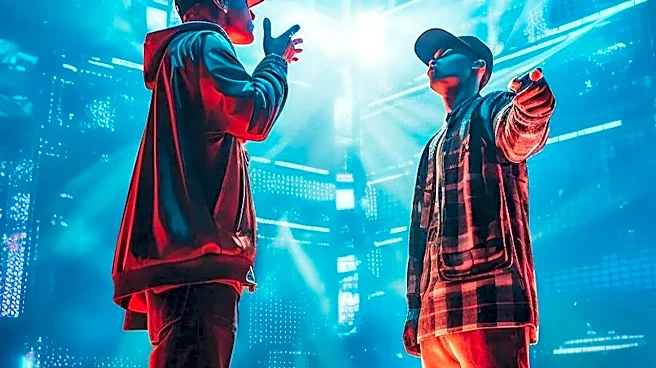
Perhaps the most beloved feature of Hip Hop Honors was its signature tribute performances. The format was simple but powerful: contemporary artists who were influenced by the honorees would perform their classic tracks, often culminating in the legends themselves taking the stage. This created unforgettable, cross-generational moments. Imagine Eminem and The Roots paying homage to LL Cool J, or the Beastie Boys covering Run-DMC's "Sucker M.C.'s." These weren't just cover songs; they were heartfelt acknowledgments of artistic lineage. The performances served as a living, breathing history lesson, connecting the dots between the genre's past and present in a way no acceptance speech ever could. It was a block party where the new school showed up to give the old school its flowers.
A Different Vibe Entirely
To understand why Hip Hop Honors felt special, you have to remember the context of other rap-centric awards. The Source Awards, for example, were legendary but also infamous for controversy, including the 1995 show that amplified the East Coast vs. West Coast beef. While exciting, that tension was a world away from the celebratory, almost academic atmosphere of Hip Hop Honors. The show was a space of unity and respect. When Outkast was famously booed while accepting an award at The Source Awards, Andre 3000 declared, "The South got somethin' to say." At Hip Hop Honors, every region and era was given its due respect without question. It was less about competition and all about appreciation.
Celebrating All Four Elements
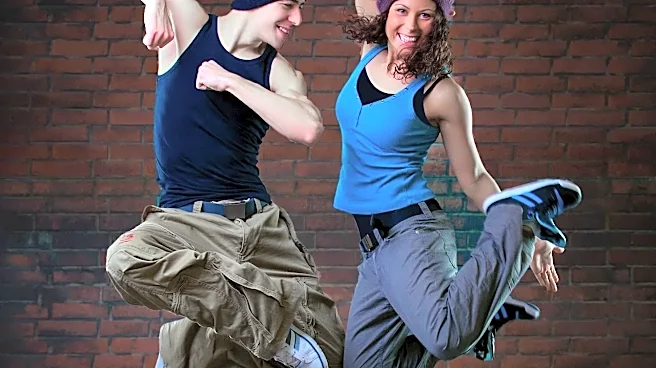
Hip-hop culture is more than just rapping, and Hip Hop Honors was one of the few televised events to consistently acknowledge that. From its very first ceremony, the show made a point to honor the other foundational pillars of the culture. Breakdancing legends like the Rock Steady Crew were honored, as was the entire art form of graffiti. DJs like Grandmaster Flash and Kool Herc received their crowns, recognized for their critical role in creating the music. By celebrating the B-boys, graffiti artists, and DJs alongside the MCs, the show presented a holistic view of hip-hop, educating a national audience on the full scope of the culture. It wasn't just a rap show; it was a tribute to a multi-faceted artistic movement.
A Legacy of Recognition
After its initial run from 2004 to 2010, the show went on hiatus before returning in 2016 for a special edition, "All Hail the Queens," which honored the pioneering women of hip-hop, including Queen Latifah, Salt-N-Pepa, Missy Elliott, and Lil' Kim. This revival, produced by Queen Latifah's Flavor Unit, was a powerful statement in a genre where women's contributions are often marginalized. The night was a massive success, culminating in an iconic performance of "U.N.I.T.Y." featuring a stage full of female MCs from across generations. Although the show was canceled after 2017, its absence is still felt. It created a blueprint for how to honor cultural legacy with style, substance, and a deep love for the art form itself.