







Sylvia Scarlett (1935)
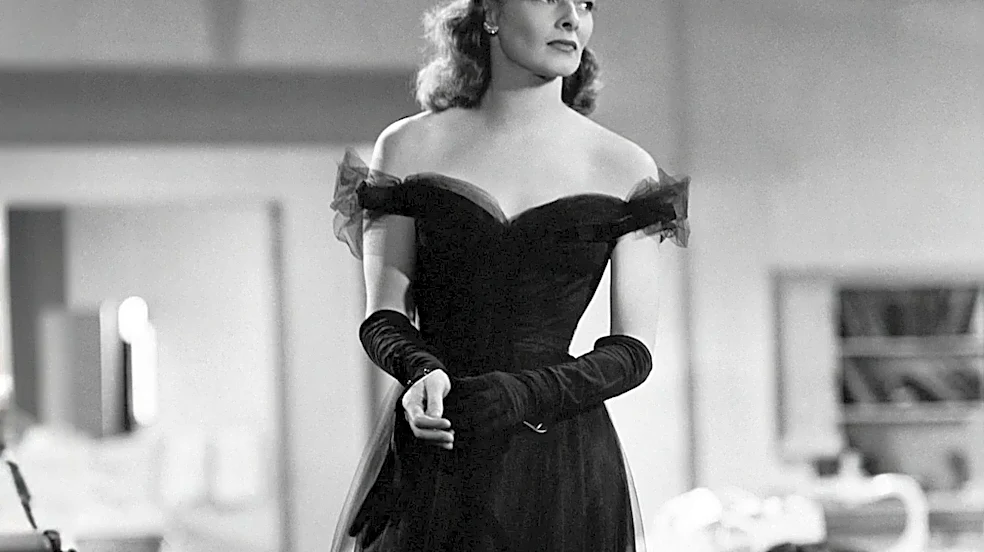
Long before gender-bending was a Hollywood trend, Hepburn was breaking boundaries in 'Sylvia Scarlett'. To escape the law, she poses as a boy, Sylvester, and falls in with a charming con man played by Cary Grant in their first on-screen pairing. The film
was a notorious flop, so disastrous that it helped brand Hepburn 'box office poison' for a time. Audiences in 1935 weren't ready for its chaotic mix of comedy and drama, or its ahead-of-its-time exploration of sexual identity. Hepburn is electric, convincingly portraying the freedom and confusion of living life as a young man. It's a bizarre, fascinating film that shows her willingness to take massive risks, even if it meant a commercial failure.
Alice Adams (1935)
While she was a box office bomb in 'Sylvia Scarlett', the same year Hepburn delivered one of the most heartbreaking and relatable performances of her career in 'Alice Adams'. She plays a young woman from a lower-class family desperately trying to climb the social ladder in her small town. Hepburn perfectly captures the painful insecurity and frantic pretension of a girl trying to appear wealthier and more sophisticated than she is. The performance earned her an Oscar nomination, and many, including winner Bette Davis, felt she was robbed of the award. While it was a success at the time, it has been overshadowed by her later, more commanding roles, but it remains a masterclass in vulnerability.
A Woman Rebels (1936)
If you want to see the quintessential feminist Hepburn persona, look no further than this period drama set in Victorian England. She plays Pamela Thistlewaite, a woman who defies her strict father and societal norms by demanding an independent life. She has a child out of wedlock, refuses to marry for convenience, and becomes a crusading journalist for women's rights. The film's tagline could be a line spoken by her character: 'Even though I'm a woman, I have brains and I intend to use them'. Like other challenging roles from this period, it was a box office failure, as audiences were not yet receptive to its strong feminist themes. Today, it stands as a powerful, if melodramatic, testament to the themes that would define her star image.
Summertime (1955)
By the 1950s, Hepburn was a bona fide legend, but she revealed a new layer of her talent in this stunning David Lean film. She plays Jane Hudson, a lonely, middle-aged American secretary on a dream vacation to Venice. Stripped of her usual sharp-tongued confidence, Hepburn gives a performance of raw vulnerability as a woman confronting her own loneliness and insecurities before finding a fleeting, bittersweet romance with an Italian shopkeeper. Filmed entirely on location, Venice itself becomes a character, its beauty mirroring Jane's emotional awakening. This was a personal favorite film of director David Lean, and it shows Hepburn in a softer, more fragile light than many fans are used to seeing.
The Madwoman of Chaillot (1969)
This late-career film is a quirky, star-studded curio that is a must-see for devoted fans. Based on a French satirical play, Hepburn plays Countess Aurelia, an eccentric woman living in a Parisian fantasy world of the past. When she learns a cabal of greedy businessmen plan to drill for oil under Paris, she and her equally eccentric friends concoct a plan to stop them. The film is a fascinating, if messy, blend of social commentary and whimsical fantasy, featuring an incredible cast that includes Charles Boyer, Yul Brynner, and Danny Kaye. Hepburn’s performance was deeply personal, filmed shortly after the death of Spencer Tracy. It's an odd but touching film that showcases her enduring, otherworldly star power.