



First, What Exactly Is a Fade?
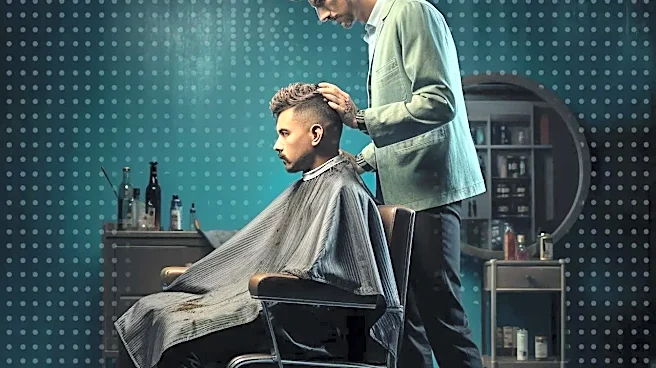
Before we dive into the variations, let's establish what a fade actually is. It’s a barbering technique where hair on the sides and back of the head is cut in a gradual transition, moving from shorter hair at the bottom to longer hair towards the top.
The “fade” refers to how the hair seems to disappear or fade into the skin. It's all about a seamless, blended gradient that creates a clean and sharp look. This isn't a blunt chop; it’s a detailed art form that requires precision and a good eye. Its origins are often traced to the U.S. military and Black barbershops, where practicality and sharp style converged.
The Low Fade: The Subtle Statement
If fades had a starting point, the low fade would be it. This cut begins just above the ears and follows the neckline. It’s the most understated of the bunch, offering a clean, polished look without a dramatic statement. Think of it as the business-casual of haircuts: professional enough for the office but stylish enough for after-hours. Because it keeps more length on the sides, it’s a great entry point for anyone trying a fade for the first time. The low fade is perfect for adding a touch of sharpness while maintaining a classic shape, and it works well for men with longer face shapes by keeping more fullness on the sides.
The Mid Fade: The Versatile All-Rounder
The mid fade is arguably the most popular and versatile of the three. As the name suggests, it starts in the middle of the sides of the head, typically beginning at the temples. This placement creates a more noticeable contrast than a low fade but avoids the high-contrast drama of a high fade. It's the perfect balance, offering a modern, stylish look that complements a huge range of hairstyles on top, from a pompadour to a textured crop. Its balanced appearance makes it a flattering choice for most face shapes, particularly oval and square, as it provides a clean look without dramatically altering the head’s silhouette.
The High Fade: The Bold Contrast
For those who want a sharp, edgy, and high-impact look, the high fade is the go-to choice. This style begins high up on the sides and back, often near the crown or the top corner of the forehead, creating a dramatic transition to the longer hair on top. The high fade exposes more of the scalp, resulting in a very clean and bold aesthetic. This cut is excellent for drawing attention upward and can make round faces appear longer. It’s a confident style statement that has deep roots in hip-hop culture and remains a staple of modern streetwear looks. While it looks incredibly sharp, it also requires more frequent trips to the barber to maintain its crisp lines.
More Than a Haircut: How Fades Reshaped Grooming
The widespread popularity of the fade has done more than just change hairstyles; it has reshaped the entire men's grooming industry. The precision required for a good fade has elevated the role of the barber from a simple haircut provider to a skilled artisan. It fueled the renaissance of the modern barbershop as a cultural space where men invest time and money in detailed, personalized grooming. Furthermore, the fade's adaptability has made it a universal symbol of modern masculinity—it's clean, controlled, and endlessly customizable. It proved that men's hair could be a canvas for self-expression, whether the goal is understated professionalism or bold, street-inspired confidence.