






The Cult of the Auteur
At its core, the Cannes Film Festival is built on a single, powerful idea: the director as the primary author of a film. This concept, known as the “auteur theory,” was championed by French critics who would go on to become legendary filmmakers themselves, like François Truffaut and Jean-Luc Godard. While Hollywood often builds movies around a pre-existing brand, a comic book, or a toy, Cannes builds its lineup around a director’s singular vision. To be selected for the main competition is to be recognized as an artist with something to say, not just a manager of a studio asset. This is the festival that launched Quentin Tarantino, the Coen Brothers, and Jane Campion onto the world stage. It’s where established masters like Martin Scorsese and Francis
Ford Coppola return to debut passion projects. The festival’s entire structure, from the selection process to the prestigious jury, is designed to identify and celebrate the most compelling directorial voice of the year. In a franchise-driven world where directors can be interchangeable cogs in a massive machine, Cannes fiercely protects the idea that one person’s vision is what truly matters.
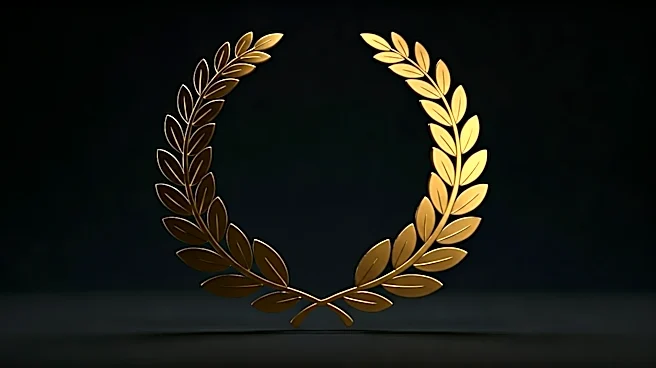
The Power of the Palme d'Or
Winning the festival’s top prize, the Palme d’Or, doesn’t guarantee a billion-dollar box office haul. What it does is far more culturally significant: it anoints a film with a level of prestige that money can’t buy. This golden palm leaf is the ultimate seal of artistic approval, instantly turning a small, challenging film into a global talking point and a must-see for serious movie lovers. Look at recent winners. Bong Joon-ho’s *Parasite* (2019) rode its Palme d’Or victory all the way to a historic Best Picture win at the Oscars. Julia Ducournau’s shocking body-horror film *Titane* (2021) became an international phenomenon. And Justine Triet’s *Anatomy of a Fall* (2023) transformed from a French courtroom drama into an Oscar-winning global hit. These films are the antithesis of franchise fare: they are complex, often divisive, and entirely original. The Palme d’Or acts as a megaphone, telling the world that this is a film that demands your attention, creating a different kind of blockbuster—a cultural one.
The Theatrical Release Standoff
Nothing demonstrates Cannes’s anti-franchise (and, more specifically, anti-streaming) stance better than its infamous feud with Netflix. In 2017, the festival faced a backlash for including two Netflix films, *Okja* and *The Meyerowitz Stories*, in its main competition, as neither was guaranteed a traditional theatrical run in France. In response, Cannes instituted a rule: any film competing for the Palme d'Or must commit to a French theatrical release. Netflix, whose business model is built on premiering films directly on its platform, has largely refused to comply. As a result, major Netflix-backed awards contenders from directors like Alfonso Cuarón (*Roma*) and Martin Scorsese (*The Irishman*) have been forced to premiere elsewhere. This line in the sand is a powerful statement. Cannes is defending the sanctity of the movie theater experience, positioning it as an essential part of a film's life—a direct philosophical counterpoint to the streaming-first model that often serves as a pipeline for franchise-adjacent content.
An Entire Ecosystem for Original Film
Cannes is more than just a two-week-long red carpet. Running concurrently with the festival is the Marché du Film, the world’s largest film market. While the festival celebrates finished films, the market is where the business of future independent cinema gets done. Here, thousands of producers, distributors, and financiers gather to buy and sell films, secure funding for scripts, and forge partnerships. This is where an obscure genre film from South Korea might find a U.S. distributor, or a fledgling European director can get the money to make their first feature. It’s a bustling, practical ecosystem dedicated to getting non-franchise movies made and seen. It provides a vital commercial lifeline for the very kinds of movies the festival champions. Without the Marché, the artistic celebration of the festival would be purely symbolic. With it, Cannes becomes a functional, economic engine for global independent film, creating a genuine alternative to the Hollywood studio system.