





More Than a Medium, It's a Medium
First, let's get a common misconception out of the way, one that plagues awards shows from the Emmys to the Oscars: animation is not a genre. It's a medium—a method of visual storytelling where every single frame is built from scratch. A single Emmy category
can’t possibly represent the artistic breadth of a field that produces everything from the painterly action of "Blue Eye Samurai" to the stylized comedy of "Bob's Burgers." While live-action television has dozens of specific craft awards—for cinematography, costumes, hairstyling, and more for various types of programming—animation's myriad crafts are often relegated to a single, juried award for "Individual Achievement." This structure, while well-intentioned, reinforces the idea that animation is a monolith, rather than a diverse collection of artistic disciplines as complex as any in live-action.
The Unseen Labor of World-Building
Consider the work that goes into a show like Netflix's "Arcane." Before a single character moves, storyboard artists plot every camera angle and action beat, functioning as both director and cinematographer. Character designers don't just sketch an outline; they create a visual language for personality and emotion, as seen in the Emmy-winning work on "Blue Eye Samurai." Background painters and art directors build entire worlds, from the sprawling, steampunk-inspired cities of Piltover and Zaun in "Arcane" to the feudal Japanese landscapes in "Blue Eye Samurai." Every texture, every shadow, and every glint of light is a deliberate choice made by an artist. In live-action, these roles have their own categories and their own recognition. For animation, this immense labor is often just bundled under the success of the overall program.
A 'Juried' Award Isn't a Solution
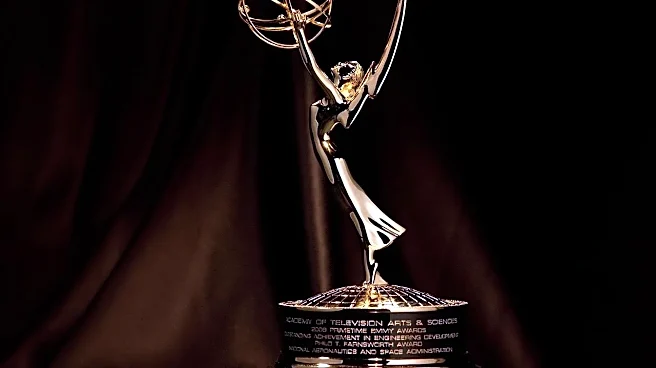
The Television Academy's answer to this is the juried award for Outstanding Individual Achievement in Animation. Unlike traditional categories, this one has no nominees. A panel of experts simply selects a handful of winners. In recent years, this has honored incredible artists for their work in storyboarding, character design, and art direction on shows like "Genndy Tartakovsky's Primal" and "Star Wars: Visions." While this recognition is valuable, it's a procedural back door. It treats animators as exceptional individuals rather than essential craftspeople working in established, vital departments. It’s the equivalent of giving a single “Outstanding Individual Achievement in Live-Action Production” award instead of separate honors for directing, editing, and sound mixing. The structure implies these animation crafts aren't consistent or universal enough to warrant their own dedicated, competitive categories.
The Path Forward: Respect the Craft
Shows like "Arcane" and "Blue Eye Samurai" have not only won the Emmy for Outstanding Animated Program but have also received nominations and wins in categories typically dominated by live-action, such as sound editing. This proves that the artistry within these shows can and should be judged on the same level as their live-action counterparts. It’s time for the Television Academy to expand its view. Creating dedicated, competitive Emmy categories for crafts like Character Design, Storyboarding, Art Direction, and Character Animation would be a monumental step. It would allow the hundreds of artists who build these celebrated shows to be recognized by their peers for their specific contributions, just as their colleagues in live-action have been for decades. It would finally acknowledge that the magic of animation isn't just a single, award-worthy act, but a symphony of individual, masterful crafts.