


The Incredible Shrinking Categories
For years, the Emmy Awards tried to keep things tidy. You had your talk shows, like David Letterman’s or Stephen Colbert’s, competing in the “Variety Talk Series” category. Then you had sketch shows, like “Saturday Night Live,” in “Variety Sketch Series.”
This separation, which began in 2015, seemed logical enough. But television doesn't stay tidy for long. Creators started making shows that didn’t fit either mold, and the number of traditional shows began to dwindle. The categories got so small that in some years, the sketch category had only two nominees. In response, the Television Academy has repeatedly tinkered with the rules. The categories were split, renamed, and, as of 2026, merged back together into a single “Outstanding Variety Series” category. This constant shuffling isn't just bureaucratic housekeeping; it’s a symptom of a larger identity crisis. The industry’s primary awards system is struggling to keep pace with the creativity it’s supposed to be celebrating, forcing innovative shows into boxes where they don't quite belong.
The 'Last Week Tonight' Problem
No show illustrates this problem better than HBO's "Last Week Tonight with John Oliver." Is it a talk show? Kind of, but Oliver rarely has guests. Is it a news satire? Yes, but its deeply researched, 20-minute segments on topics like municipal violations or the power grid feel more like investigative journalism. For years, the show dominated the Variety Talk category before being moved to the newly named "Scripted Variety Series" category in 2023. The rationale was that since the show is meticulously scripted and doesn't feature interviews, it was a better fit with sketch shows like "Saturday Night Live." The move was seen by some as an attempt to give traditional nightly talk shows a fighting chance after Oliver’s seven-year winning streak. But pitting a weekly, journalistic deep-dive against a 90-minute live sketch show creates its own bizarre apples-to-oranges comparison. The show's continued dominance in its new category only highlights the absurdity: when a show is so unique it breaks every category it's put in, is the problem the show or the categories themselves?
It's More Than Just a Trophy
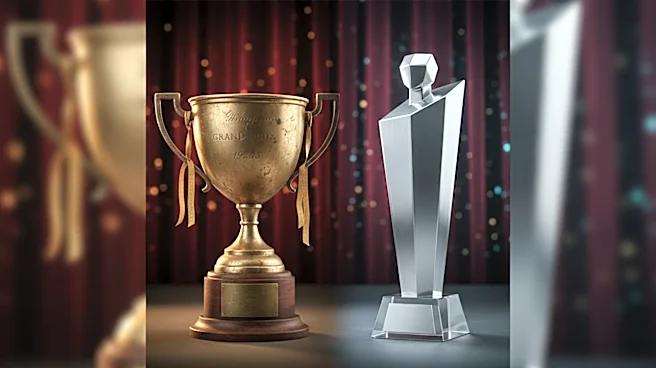
This isn't just about who gets a gold statue. These category decisions have real-world consequences for shows and their creators. For one, it creates an uneven playing field. A nightly talk show that produces over 150 episodes a year is judged against a weekly show that produces around 30. The resources, production cycles, and creative pressures are vastly different. Being shoved into the wrong category can effectively serve as a penalty for innovation. Furthermore, the constant rule changes reflect a system that is reactive rather than forward-thinking. And now, in a move that has drawn criticism from creative guilds, the Television Academy is moving the Writing for a Variety Series award, among others, out of the main primetime telecast for the 2026 Emmys. The guilds for writers, directors, and actors released a joint statement arguing that this decision devalues the very artists the Emmys are supposed to honor. When the definition of a genre is this unstable, it not only confuses viewers but can also impact a show's prestige and, ultimately, its survival.
Where Do We Go From Here?
There are no easy answers. The world of television is more creatively fluid than ever, with shows like "The Bear" sparking debates over whether they are comedies or dramas. Some have suggested creating new categories, like "Outstanding Dramedy," but that risks making things even more confusing. The Television Academy’s latest solution for the variety genre is to make the newly merged category an "area award." This means instead of voting for one winner, voters will decide whether each nominee individually merits an Emmy. This could result in multiple winners, a solution that acknowledges excellence without forcing a direct comparison between, say, a talk show and a sketch series. It’s a novel approach, but it’s also another patch on a system struggling with a fundamental question: how do you reward art that refuses to be categorized? As creators continue to push boundaries, the pressure will only grow on awards bodies to either evolve with them or risk becoming irrelevant.