





The Burden of Creation: The Myth of Prometheus & Oppenheimer
No perfect, serious film about the Titan Prometheus exists, but the myth itself is the most Nolan-esque story imaginable. A defiant figure steals fire—knowledge, technology, power—from the gods and gives it to humanity, only to be punished for eternity
while watching his gift used and abused. This is the entire spiritual blueprint for Oppenheimer. J. Robert Oppenheimer is a modern Prometheus, a man who unlocks a terrifying new power and unleashes it upon the world. Nolan’s film is a three-hour study in consequence, showing a man haunted by his creation, politically destroyed by the very system he empowered, and forever chained to the historical rock of his achievement. The film’s tension isn't just about building the bomb; it's about the moral and psychological fallout for its creator. A double feature of Oppenheimer and a hypothetical, faithfully rendered Prometheus would be a staggering meditation on the unbearable weight of genius and the horror of seeing your world-changing idea take on a life of its own.
The Lonely Protector: Troy (2004) & The Dark Knight (2008)
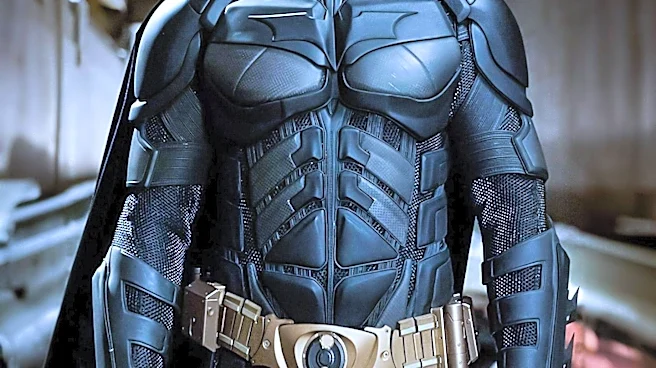
Wolfgang Petersen’s Troy strips away the gods and magic of Homer’s Iliad, grounding the epic conflict in human ambition, ego, and folly. Its version of Achilles is a man apart, the world’s greatest warrior who fights not for a king or country, but for the immortal glory of his own name. He is a solitary, brooding figure burdened by his own singular talent. Sound familiar? Pair this with The Dark Knight, where Bruce Wayne is similarly isolated by his mission. Both Achilles and Batman are symbols who must operate outside the normal strictures of society to protect it, even when that society fears or resents them. They are both defined by a personal code and haunted by loss. While Troy received mixed reviews for its historical liberties, its portrayal of Achilles as a reluctant, glory-obsessed hero finds a powerful echo in Nolan’s vision of a Batman forced to become a villain in the eyes of the city he saves.
The Gritty Reboot: Clash of the Titans (2010) & Batman Begins (2005)
The 2010 remake of Clash of the Titans is not a great film. Critics widely panned its script and lackluster 3D conversion. But its existence is a fascinating artifact of a post-Batman Begins Hollywood. The original 1981 Clash was a charming, even goofy, adventure filled with the magic of Ray Harryhausen's stop-motion creatures. The remake, however, tries to inject a heavy dose of grit, brooding, and psychological turmoil into the character of Perseus, a demigod with a major chip on his shoulder about his deadbeat dad, Zeus. This attempt to reframe a fantastical story with a veneer of dark realism is a direct descendant of Nolan’s game-changing approach to the Caped Crusader. A double feature of Batman Begins and the Clash remake isn't about shared quality; it’s a lesson in influence. You see Nolan’s formula—take a well-known character, strip away the camp, and explore the tortured psyche within—being applied, albeit far less successfully, to the world of myth.
The Impossible Labyrinth: Immortals (2011) & Inception (2010)
Tarsem Singh’s Immortals is a visual feast that, like Troy, takes extreme liberties with its source material, mashing up various myths into a new narrative. But its core strength, and its link to Nolan, lies in its commitment to world-building and navigating impossible spaces. The film, loosely based on the myth of Theseus, is a journey through a hyper-stylized, geometrically precise ancient Greece full of interlocking cubes, sheer cliff faces, and impossibly vast temples. This focus on architecture and spatial logic is pure Nolan. Pair it with Inception, a film that literally weaponizes architecture in dreams. Both films feature protagonists—Theseus and Cobb—who are driven by a deeply personal quest that forces them through a series of labyrinthine, often hostile environments. They are stories about navigating mazes, whether physical or mental, and demonstrate a shared obsession with creating unforgettable, rule-based visual worlds.