






The Myth of the 50/50 Guess
To the casual fan, a goalkeeper's job during a penalty seems simple: guess left or right and hope for the best. The reality is far more complex. A well-struck penalty travels from the spot to the goal line in less than half a second, which is faster than human
reaction time allows. If a keeper waits to see which way the ball is going, it’s already too late. Because of this, the keeper must decide where to dive *before* the ball is struck. But this decision isn't a guess; it's a rapid-fire calculation based on information gathered in the seconds leading up to the kick. They are hunters of information, looking for any tiny clue that will give them an edge in a situation where the odds are heavily stacked against them.
Reading the Kicker's Body
The primary source of information is the kicker’s body. Goalkeepers are trained to watch a sequence of tells. The first is the run-up: is it straight, or angled? A player approaching the ball from a wide angle is more likely to be opening their body to shoot across goal. Next, the focus shifts to the hips. The direction a kicker’s hips are pointing is a strong indicator of where the ball will go. A player whose hips open up is preparing to strike the ball with their instep, usually aiming for the far post. If they keep their hips closed, they are more likely to push the ball to the near post. Finally, there's the standing foot. The direction the kicker’s non-striking foot is planted offers a last-second clue. If it points toward the left corner, the ball is likely going left. It's a lightning-fast process of observation and deduction.
The Art of Psychological Warfare
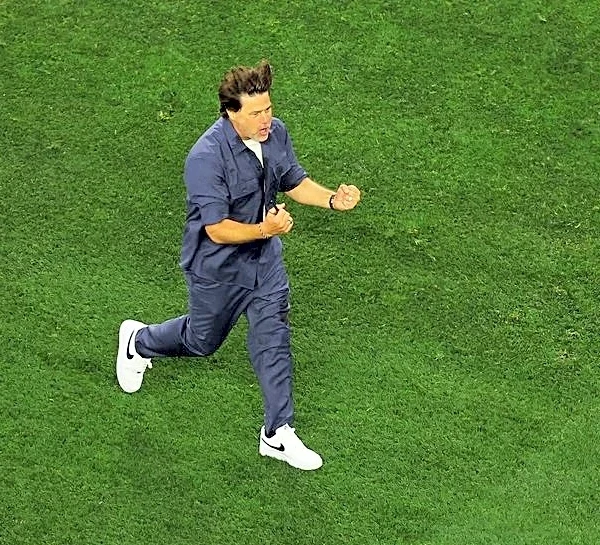
The battle isn't just physical; it's mental. Goalkeepers use a range of tactics to get inside the kicker’s head. Argentina's Emiliano Martínez became a World Cup legend in 2022 as much for his mind games as his saves. He would delay the game by holding the ball, talk to the opponent, or point to a different spot, all designed to disrupt the kicker’s routine and plant a seed of doubt. A confident, rhythmic run-up is a kicker’s best friend; anything a keeper can do to break that rhythm increases their chances. Making the goal seem smaller by spreading their arms wide, dancing on the line, or projecting unshakable confidence are all part of the performance. The goal is to make the kicker overthink the simplest task in soccer: putting the ball in an open net.
Doing the Homework with Data
In the modern era, the work starts long before the whistle blows. Teams employ data analysts who compile detailed reports on opponents’ penalty tendencies. Keepers study heat maps showing where a player has placed their last 5, 10, or 20 penalties. Does he have a favorite side? Does he change his pattern under pressure? The most famous example of this is Dutch goalkeeper Tim Krul in the 2014 World Cup. Substituted on just for the shootout, Krul was seen pointing to the corner he knew the Costa Rican player was likely to shoot, armed with information from his coaches. This data-driven approach gives the keeper a baseline assumption. If the data says a player goes left 80% of the time, the keeper can commit to that side with more confidence, ignoring other physical tells.
The Unbeatable Penalty Dilemma
Ultimately, goalkeepers know that a perfectly taken penalty—one hit with power and placed in the top corner—is virtually unsaveable. Their job isn’t to stop every shot; it's to force an error. By using mind games, showing a tell (like taking a small step to one side just before the run-up to bait the kicker), or simply being an intimidating presence, they hope to compel the shooter to change their mind or mishit the shot. Sometimes, the best strategy is the most counterintuitive: staying in the middle. Since most kickers aim for a corner, diving is the default. But a surprising number of penalties are aimed down the center, hoping the keeper will dive out of the way. Staying put can lead to the easiest save of a keeper's life—and make them look like a genius.