






The Age of More-Is-More
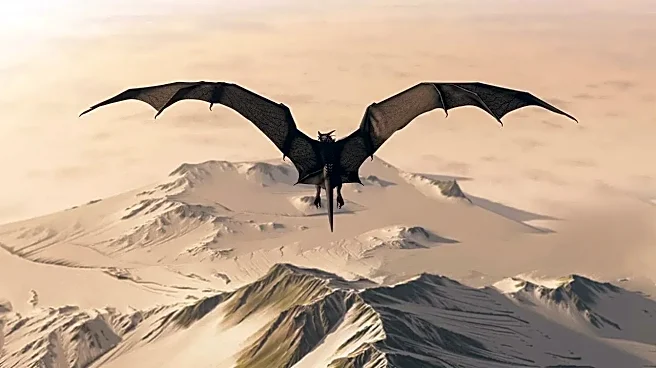
Ever since 'Game of Thrones' ended, it seems every network and streamer has been chasing the same dragon—literally. The prevailing wisdom suggests that the key to fantasy success is scale. Bigger budgets, more elaborate CGI creatures, and epic battles
that fill the screen have become the genre's calling card. Shows like 'House of the Dragon' and 'The Lord of the Rings: The Rings of Power' are stunning visual achievements, with production values that would have been unthinkable on television a decade ago. As both series head into their third seasons this year, the spectacle is guaranteed to continue. And Netflix's 'The Witcher,' expected to release its final season in 2026, has consistently relied on high-octane monster fights and dazzling magic. There's nothing inherently wrong with this approach. It's thrilling to see a dragon lay waste to a fleet or an armored host charge across a fantastical landscape. But this relentless focus on escalation risks missing the point of what makes fantasy worlds truly captivating.
Magic Is Stronger With Rules
The greatest works of fantasy aren't memorable because of the size of their monsters, but the integrity of their worlds. What made the original 'Game of Thrones' so compelling wasn't just the dragons, but the intricate web of political alliances, family histories, and geographic realities that governed every decision. The rules of Westeros—who could inherit, what debts were owed, the significance of winter—were the engine of the drama. Magic existed, but it was rare, mysterious, and often costly. This principle holds true for the genre's foundational texts. J.R.R. Tolkien spent decades developing the languages, history, and internal logic of Middle-earth before he even wrote the main narrative. The power of the One Ring isn't just that it's a magical object; it's that its rules of temptation, corruption, and power are absolute and apply to everyone, from hobbit to wizard. When a world has firm rules, the audience can invest in the stakes. We learn the boundaries, and that allows us to appreciate when and how characters try to break them.
Limits Are What Create Drama
Think of it this way: a story where a hero can do anything with limitless magic is boring. There are no stakes. But a story where magic costs something—a piece of your soul, years of your life, a painful physical toll—is immediately more interesting. The struggle becomes not just about defeating the villain, but about the price of victory. Strong world-building provides these limitations naturally. If a kingdom's wealth is based on a single port, a naval blockade is a world-ending threat. If a society is built on a rigid prophecy, a character who defies it creates compelling chaos. These are the elements that create true suspense, long after the novelty of a new monster has worn off. When we understand the 'why' behind a fantasy world's conflicts—the history, the laws, the grudges—the 'what' of the battles becomes infinitely more meaningful. Without that foundation, even the most impressive CGI beast is just a hollow special effect.
A Hope for the Fall Slate
As we look ahead to Fall 2026 and beyond, with new adaptations like 'Fourth Wing' on the horizon, there's an opportunity for creators to rebalance the scales. This isn't a call to abandon spectacle, but to ensure it serves the story, not the other way around. The most enduring fantasy series will be the ones that remember the magic isn't in the fireball, but in the intricate spell required to cast it. They will build worlds that feel less like a video game with escalating boss-fights and more like a real place with history, culture, and consequences. The question for the upcoming slate is which shows will learn this lesson. Will they give us bigger monsters, or will they be brave enough to give us stronger, more fascinating rules?