




The Runway Moment
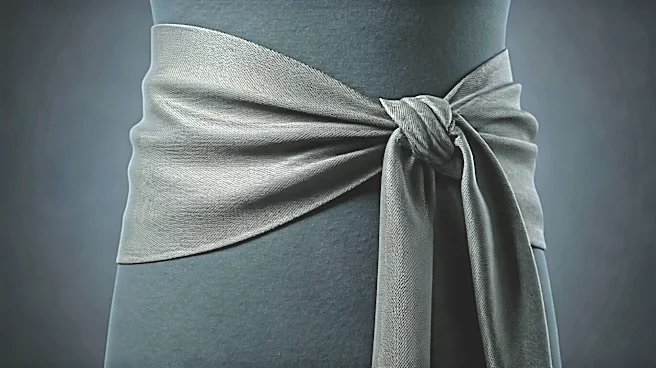
On the most influential runways in menswear, the silhouette was subtly but significantly altered. At Dries Van Noten, long, fluid sashes in contrasting fabrics were tied loosely over elegant coats, trailing with a poetic nonchalance. At Kenzo, designer
Nigo employed obi-style belts, a nod to his Japanese heritage, cinching workwear jackets to create a defined, structured waist. Elsewhere, designers like Bluemarble and Walter Van Beirendonck experimented with knotted ropes and brightly colored fabric belts, each offering a different take on the same central idea: drawing attention back to the torso. This wasn't a singular, monolithic trend but a collective conversation, with each designer using the sash to add a layer of intention, color, or shape to their collections. It was a quiet statement that spoke volumes, shifting focus from the broad shoulders of traditional menswear to a more considered, and often softened, midsection.
More Than a Cummerbund
It’s easy to dismiss the sash as a cousin of the cummerbund, that starchy accessory relegated to black-tie events and prom rentals. But the modern runway sash operates on a completely different frequency. The cummerbund is rigid, designed to create a seamless, uninterrupted line between a tuxedo shirt and trousers. Its purpose is uniformity and formality. The new waist sash, by contrast, is about personality and deliberate disruption. It’s often worn over outerwear, not under it. It’s made from soft, flowing materials like silk or rough, utilitarian textiles like canvas. It can be perfectly knotted or artfully disheveled. While the cummerbund aims to hide and smooth, the sash aims to highlight and define. It's a tool for self-expression, not a rule to be followed, inviting a touch of sprezzatura—a studied carelessness—into an outfit.
A Symbol with Masculine Lineage
While this iteration feels fresh, the sash has a long and storied history in the male wardrobe. For centuries, it was a marker of status, power, and function. Military officers wore silk sashes to denote rank, their colors signifying allegiance and authority on the battlefield. In many cultures, from the Japanese obi to the sashes of South American gauchos, the accessory was both practical—for holding tools or weapons—and ceremonial. It was a tangible symbol of honor, skill, or social standing. This historical context is what gives the modern sash its subversive power. Designers are tapping into a lineage of masculine symbolism but stripping it of its rigid, martial connotations. The sash still signifies something, but now it signifies an appreciation for detail, a softness in form, and a confidence to play with the traditional boundaries of menswear.
Redefining the Modern Waistline
So, what does it all mean for the average guy? While a floor-trailing silk sash might not be practical for a morning coffee run, the trend’s core message is accessible. It’s about using an accessory to create a shape and break up the monotony of a standard silhouette. For years, menswear has been dominated by either ultra-slim fits or oversized, streetwear-inspired shapes. The sash offers a third way: a method for adding definition without constriction. It allows a man to play with proportion, cinching a loose coat or adding a pop of color to a monochrome look. It represents a move toward a more thoughtful and less prescriptive form of masculinity—one where personal style is a matter of curation, not just conformity. It’s a quiet declaration that dressing well can be about adornment and artistry, not just utility.