






1. Pick a Horse in the Race, Any Horse
You don't need a lifelong allegiance. Sports are infinitely more interesting when you have a rooting interest, however flimsy. Is there a team with a player from your favorite NFL or NBA star's home country? Pick them. Do you like their uniform color?
Great. Is one team a massive underdog? Perfect. Did a player on one team do a funny commercial? You have your guy. Just choose one. This instantly gives you a stake in the drama. For the next 90 minutes, they are *your* team. You are now licensed to groan when they miss a shot and leap off the couch if they score.
2. Forget the Offside Rule (For Now)
Everyone will tell you to learn the offside rule. Don't. It's confusing, and the broadcast will show you a replay with a big line on the field every time it's called. Instead, focus on two things. First, the flow. Notice how the game is a constant battle for space, like a fluid version of chess. Second, what constitutes a foul. If a player gets knocked down and the whistle blows, it's a free kick. If it happens inside the big rectangle near the goal (the penalty box), it’s a penalty kick—soccer’s equivalent of a free throw to win the game. That’s 90% of what you need to follow the action.
3. Find the Narrative
Every big game is a story. Your job is to find it. The announcers will lay it out for you in the first 10 minutes. Is it the aging superstar’s last chance at glory (think LeBron in the finals)? Is it a bitter rivalry between two neighboring countries (think Yankees-Red Sox)? Is it a team of young, exciting upstarts against a cynical, defensive powerhouse? Listening for this narrative transforms the game from 22 people chasing a ball into a compelling drama. It provides the context, the stakes, and the reason everyone is so emotionally invested.
4. Zero In On One Player Per Team
Watching all 22 players is overwhelming. Simplify it. In the pre-game hype, identify each team's main attacking star (the goal scorer, the playmaker) and their best defender or midfielder (the engine, the destroyer). Think of the attacker as the star quarterback or wide receiver, and the defensive player as the shutdown cornerback or elite linebacker. By tracking just those two players, you’ll start to see the game within the game: the attacker trying to find space, the defender trying to deny it. This personal duel gives you a focal point amidst the beautiful chaos.
5. Learn Just Three Key Phrases
You don't need a whole dictionary. Just get three terms down. 1. **Set Piece:** This refers to any time the game restarts from a dead ball, like a corner kick or a free kick. These are huge scoring opportunities, like a power play in hockey. Everyone in the bar will hold their breath. 2. **The Final Third:** Announcers say this constantly. It just means the third of the field closest to the goal a team is trying to score on. When a team has the ball here, it's a scoring threat. 3. **Stoppage Time (or Added Time):** The clock in soccer counts up to 90 minutes and doesn't stop for injuries or delays. To make up for that lost time, the referee adds a few minutes at the end of each half. This is where chaos happens. Never leave a 1-0 game before the final whistle.
6. Embrace the Collective Anguish and Joy
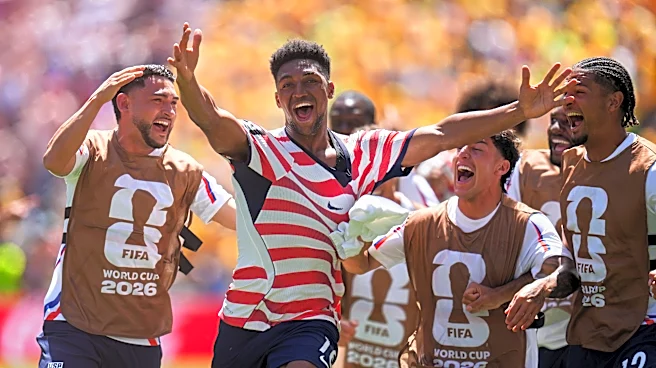
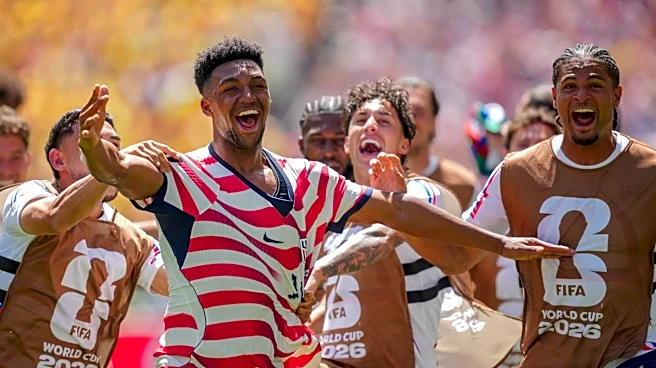
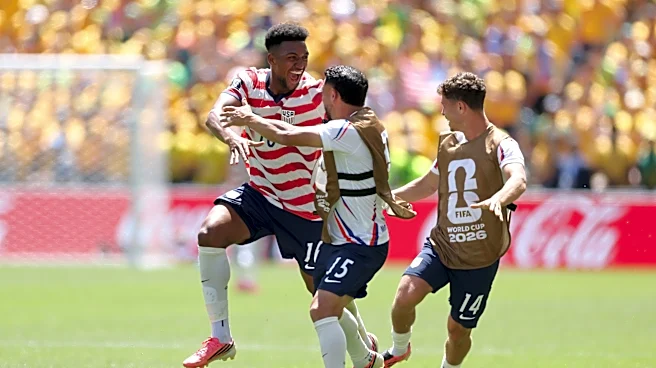
American sports are full of constant scoring and action. Soccer is different. It’s a slow burn. A 90-minute exercise in tension punctuated by moments of explosive release. The beauty isn't just in the goals; it's in the near-misses, the incredible saves, the perfectly timed tackles. A shot that skims the post will elicit a groan from an entire pub—that shared agony is part of the fun. A goal is a moment of collective, unadulterated euphoria. Don't just watch the ball; watch the crowd. Feel the rhythm of the game. It’s less about constant gratification and more about the emotional journey to get there.