






The Magic of Loopwheel Fleece
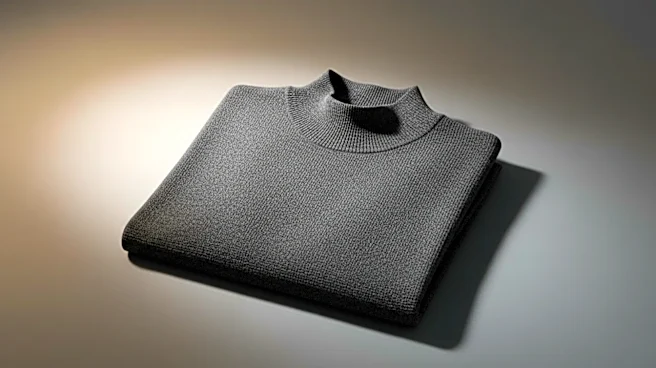
Before modern, high-speed knitting machines took over, premium sweatshirts were often made on loopwheel machines. This incredibly slow process, with only a few factories still operating them today (mostly in Japan), knits fabric in a tube with very low tension.
The result is a uniquely soft, dense, and durable fleece that has no side seams for a superior fit. While some high-end brands still use this method, most mass-market “heritage” sweats use standard fleece-back cotton, which can’t replicate that specific, substantial feel.
Champion’s Original Reverse Weave
Champion’s Reverse Weave is legendary for a reason. Patented in the 1930s to prevent shrinkage during athletic department laundering, the fabric’s grain runs horizontally instead of vertically. This was combined with ribbed side panels (or gussets) to improve range of motion. While Champion still produces Reverse Weave, vintage examples feel different—often heavier, with a boxier fit, wider armholes, and a more robust cotton-poly blend that has stood the test of time. Modern versions tend to have a slimmer, more contemporary fit.
The Underarm Gusset
Look under the arm of a vintage sweatshirt or jacket and you might find a diamond- or square-shaped piece of fabric sewn in. This is a gusset, a clever tailoring addition used to increase range of motion and reduce stress on the seams. In an era before four-way stretch fabrics, this was crucial for athletic wear. It’s a labor-intensive detail that requires more complex pattern-making and sewing, so it’s one of the first things to be eliminated in modern, cost-engineered garments which often rely on fabric stretch alone.
Single-Stitch Hems
Flip the sleeve or bottom hem of a t-shirt made before the mid-1990s, and you'll likely see a single, clean line of stitching. This “single-stitch” construction was the standard for decades. By the mid-to-late '90s, most manufacturers switched to a more efficient and forgiving double-stitch hem, which uses two parallel rows of thread. For vintage collectors, a single stitch is a key indicator of a garment’s age and is often associated with the softer, thinner t-shirts of the 70s and 80s.
Heavy-Duty Metal Zippers
Before YKK became the undisputed king of zippers, brands like Talon dominated the market. Vintage jackets from the mid-20th century often feature heavy-duty metal Talon zippers, known for their substantial feel and durability. While YKK also makes excellent zippers, many modern reproductions opt for lighter-weight plastic or nylon coil zippers that lack the satisfying heft and industrial-grade feeling of their vintage brass or aluminum predecessors.
Woven vs. Printed Neck Tags
A garment’s tag is its birth certificate. On older sportswear, you’ll typically find beautifully woven labels with distinct, era-specific fonts and logos, like Champion’s “Running Man” tag from the 70s. These were stitched into the garment. As production scaled up, many brands switched to cheaper, heat-transferred or printed tags that can fade, peel, or crack over time, losing a small but significant piece of the garment’s character.
Flat-Locked Seams
Another premium construction detail you'll find on older sweatshirts is the flat-locked seam. This method joins two pieces of fabric by interlocking them and sewing them together with a four-needle machine, creating a strong seam that lies completely flat on both sides. This provides superior comfort by eliminating any bulky internal seam allowance that could chafe the skin. It’s a more complex and slower process than the common overlocked seams used today, where the fabric edges are simply serged together.
100% Cotton Fabric
While cotton-polyester blends have been around for a while, older sportswear, especially from before the 1980s, was more likely to be made of 100% cotton. This gave the garments a specific weight and feel that aged beautifully, softening with every wash. Modern blends are often used to reduce cost and add wrinkle resistance, but they can't quite match the breathable, substantial character of high-quality, all-cotton vintage pieces.