





A Team Born From a New Nation
To understand Croatia’s footballing story, you have to understand its history. The nation declared independence from Yugoslavia in 1991, followed by a brutal war. For a young country seeking to forge its identity, the national football team became a powerful
symbol of sovereignty and pride. The first great Croatian team, which stunned the world by finishing third at 1998 World Cup, laid the foundation. They showed what was possible. But it was the generation that followed, coming of age two decades later, that would turn a compelling story into an epic.
The Masters of the Midfield
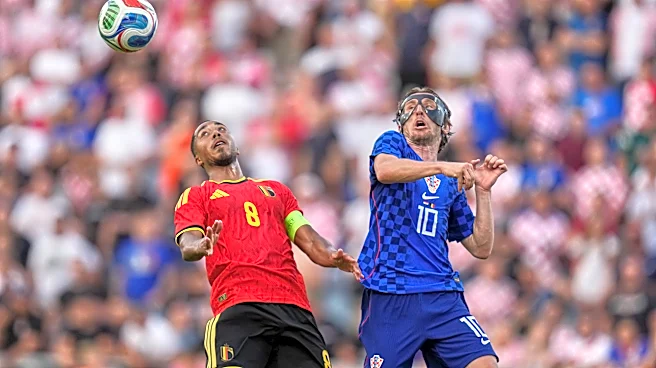
At the heart of this “Golden Generation” was arguably the greatest midfield trio of their era: Luka Modrić, Ivan Rakitić, and Marcelo Brozović. Modrić, the balletic conductor from Real Madrid, served as the team’s brain and soul, a player whose vision and tireless work rate defied his age. Alongside him, Rakitić of Barcelona fame provided power, precision, and tactical intelligence. They were complemented by a cast of relentless and talented players like striker Mario Mandžukić, a warrior who scored crucial goals, and winger Ivan Perišić, a two-footed threat with an engine that never quit. This wasn't just a collection of stars; it was a cohesive unit that played with a shared, unspoken understanding.
The Miraculous Moscow Run of 2018
The 2018 FIFA World Cup in Russia was this generation’s defining moment. Croatia wasn't just good; they were unbreakable. They navigated a brutal knockout stage by refusing to lose, winning three consecutive matches in extra time—two of them on penalty shootouts. Their journey to the final was a masterclass in endurance and mental fortitude. They dispatched Denmark, hosts Russia, and a talented England side, each time digging deeper than their opponents. While they ultimately fell to a powerful French team in the final, the 4-2 loss did nothing to diminish their achievement. They had captured the world’s imagination, proving that heart and harmony could challenge football's established Goliaths.
An Encore in the Desert
Many assumed 2018 was the glorious end of an era. They were wrong. Four years later, at the 2022 World Cup in Qatar, a supposedly aging Croatian team did it again. With Modrić still pulling the strings at 37, they showcased their trademark grit. They knocked out tournament-favorites Brazil in a dramatic quarter-final penalty shootout, a victory that felt like a condensed version of their entire story: technically outmatched on paper but superior in spirit and belief. Though they lost to eventual champions Argentina in the semi-final, they rallied to defeat Morocco for a third-place finish. It was confirmation that their success was no fluke but the product of a deeply ingrained winning culture.
A Legacy of Belief
The legacy of Croatia's Golden Generation extends far beyond medals and tournament runs. They gave a small nation a massive presence on the world stage, transforming its global image. Every four years, the globe knew to watch for the little country with the checkered shirts and the unbreakable will. For Croatians, the team was a source of unity and immense pride, a recurring reminder that they could compete with and beat anyone. The players became national heroes, embodying a spirit of resilience that resonated deeply with their country's own story of survival and success.