





A Nation's Unbearable Weight
The pressure was immense, almost suffocating. Brazil, the spiritual home of ‘the beautiful game,’ was hosting the World Cup for the first time since 1950. That previous tournament had ended in its own national tragedy, the ‘Maracanazo,’ a final-match
loss to Uruguay that haunted the nation for generations. In 2014, the goal was exorcism and coronation. The obsession was with the ‘Hexa,’ a sixth World Cup title. Every match, every step, was freighted with the hopes of 200 million people. The players, many of whom were global superstars, carried the weight of history and expectation on their shoulders. It was a dream, but one teetering on the edge of a precipice.
The Cracks Before the Shattering
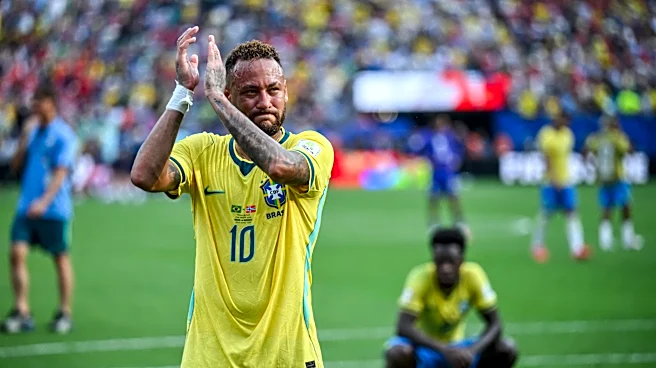
Even before kickoff against Germany, the dream was showing fractures. In the quarter-final victory over Colombia, Brazil suffered two critical blows. First, their talismanic forward, Neymar, was stretchered off with a fractured vertebra following a knee to the back, ruling him out of the tournament. The emotional outpouring was immediate; a nation mourned the loss of its brightest star. The second blow was the suspension of their captain and defensive anchor, Thiago Silva, who received his second yellow card of the tournament. Brazil’s federation appealed the suspension, but FIFA rejected it. The team heading into the semi-final was not just without its best attacker and best defender; it was emotionally frayed and structurally compromised.
Eighteen Minutes of Annihilation
The match, held at the Estádio Mineirão in Belo Horizonte, began with an emotional display, with captain David Luiz and goalkeeper Júlio César holding up Neymar's jersey during the anthem. But sentimentality was no match for the German machine. The collapse began in the 11th minute and defied belief. Between the 11th and the 29th minute, Germany scored five times. Four of those goals came in a dizzying six-minute span. The stadium fell into a stunned, horrified silence. Fans were shown openly weeping in the stands. On the field, the Brazilian players looked shell-shocked, wandering in a daze as Germany passed and moved with ruthless efficiency. It wasn't a football match anymore; it was a public dissection. Miroslav Klose scored his 16th career World Cup goal, surpassing Brazil's own Ronaldo as the all-time leading scorer—a record broken on Brazilian soil, adding insult to profound injury.
The Anatomy of a Collapse
Tactically, Germany was brilliant, but Brazil's implosion was total. Without Thiago Silva's leadership, the defense was a disorganized mess. David Luiz, wearing the captain's armband, abandoned his position with reckless abandon, creating vast spaces that the Germans clinically exploited. The midfield, missing the defensive shield Silva provided, was overrun. Psychologically, the team simply short-circuited. After the second goal, panic set in, and any semblance of a game plan evaporated. Coach Luiz Felipe Scolari later called it a "blank out," a moment when everything became disorganized and panicked. Germany, meanwhile, played with a cold, precise beautiful game of their own, a stark contrast to Brazil's raw, unravelling emotion.
The Ghost of Belo Horizonte
The final score was 7-1. Oscar's last-minute goal for Brazil was anything but a consolation. The result, immediately dubbed the ‘Mineirazo,’ was Brazil's worst-ever defeat, equaling a 6-0 loss in 1920, and shattered their 62-match unbeaten streak in competitive home games. Players left the field in tears, apologizing to their nation. Scolari called it the "worst day of my life" and resigned after the tournament. The defeat wasn't just a loss; it was a national humiliation that triggered a period of deep soul-searching for Brazilian football. The iconic yellow jersey, once a symbol of joy and global dominance, became a reminder of a historic trauma, a day when a nation's dream turned into an unforgettable nightmare witnessed by the entire world.