





The Five-Note Shadow
Let’s be clear: the five-note motif from *Close Encounters of the Third Kind* is one of the most perfect pieces of musical storytelling in cinema history. It’s not just a tune; it’s a thesis. In five simple, diatonic notes, Williams bottled the essence
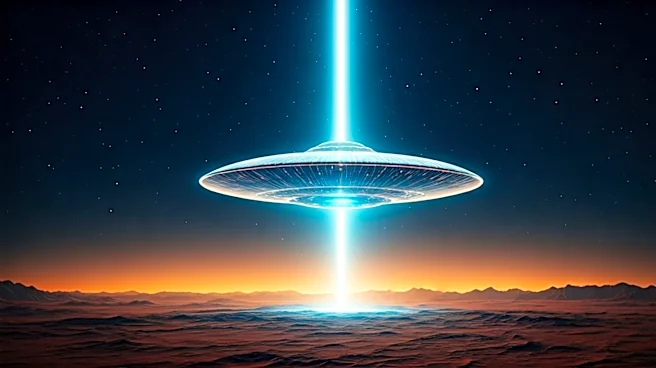
of hopeful, wondrous, slightly naive first contact. It’s the sound of humanity reaching out with a child’s curiosity, a musical handshake offered to the cosmos. That sequence—a call and response between synthesizer and mothership—is so definitive that it has become the default sound of friendly aliens in the cultural imagination. And that’s the problem. The modern concept of “Disclosure” isn’t a wondrous light show in the Wyoming desert. It’s a messy, politically fraught, potentially terrifying paradigm shift. It implies decades of government cover-ups and a reality far more complex than a simple, elegant greeting. To use anything resembling that iconic theme would feel like a nostalgic throwback, undercutting the gravity of a world turned upside down.
The Music of Paranoia and Power
To score the human-level drama of Disclosure, Williams doesn't need to look to the stars; he needs to look at his work on terra firma. His scores for Oliver Stone’s *JFK* and Spielberg’s *The Post* are masterclasses in musicalizing conspiracy and institutional power. The *JFK* score, with its martial percussion, anxious string passages, and sense of inexorable dread, is the perfect template for the “cover-up” aspect of the story. It’s the sound of file cabinets being locked, truths being buried, and powerful men speaking in hushed tones. Imagine a theme not for the aliens, but for the shadowy government agency that has kept them secret. Williams could deploy nervous, repetitive woodwind figures and unsettling brass chords to create a landscape of mistrust. This isn’t the music of awe; it’s the music of suspicion. It would ground the film not in cosmic wonder, but in a very human struggle for truth.
Orchestrating Awe, Not Just Wonder
When the ships finally appear, Williams has another gear entirely, one that is often overshadowed by his more hummable melodies. It’s the sound of overwhelming, terrifying majesty. This is different from the childlike wonder of *E.T.* or *Close Encounters*. This is the awe you feel staring into the abyss. Think of the darker, more imposing moments in his *Star Wars* scores—not the triumphant main theme, but the sheer, brutalist power of the Imperial March. Or consider the score for *War of the Worlds*, a work of relentless, churning terror. Williams can write music that makes you feel small and insignificant. For a Disclosure event, he could lean into massive, dissonant brass clusters and deep, resonant percussion that feel more geological than musical. Instead of a simple, inviting melody, he could create a vast, complex sonic texture—a wall of sound that communicates the sheer scale and alien otherness of the visitors. It would be the sound of humanity grappling with something far beyond its comprehension.
Finding the Intimate in the Infinite
Ultimately, a story about Disclosure is a story about us. How do we react? What does it do to our families, our faith, our sense of self? Williams’s true genius lies in his ability to find the small, intimate human heart beating inside the grandest spectacle. For every soaring starship, there is a quiet piano theme for a lonely hero. In *Schindler’s List*, the soul of the film isn’t in orchestral swells, but in a solitary, weeping violin. For a Disclosure score, Williams could anchor the cosmic chaos with a simple, searching theme for a central character, played on a solo instrument like a cello or piano. This theme wouldn’t be about aliens; it would be about loss, confusion, or fragile hope. It would provide the emotional core, reminding the audience that the most important part of this story isn't what's in the sky, but what's happening in the hearts of the people on the ground. This contrast—between the immense, impersonal sound of the aliens and the delicate, personal music of humanity—would be where the score finds its true power.