








An Audio Guide to the Action
On your couch, a long sequence of passes in the midfield might seem boring. In a packed bar, that same sequence might be met with a rising hum of anticipation, culminating in a collective gasp as a player attempts a risky forward pass. Soccer is a game
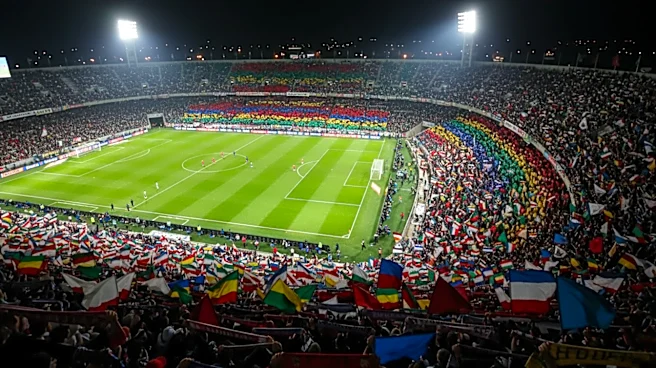
of flow and pressure, and a crowd is the ultimate real-time interpreter. The groans tell you when an opportunity was squandered. The sudden roar tells you to look up from your beer because something important is happening. For a new fan, the crowd's vocal reactions act as an audio guide, teaching you what moments carry weight long before a goal is ever scored. You learn to recognize the subtle shifts in momentum and tactical intent through the emotional responses of those who already know the game. This isn't just noise; it's a form of social learning.
The Power of Shared Emotion
Sociologists have a term for the electric feeling of being in a group experiencing the same thing at the same time: "collective effervescence." It’s the feeling that makes concerts, rallies, and, yes, sporting events feel bigger than the sum of their parts. When you watch a game alone, you experience your own emotions. In a crowd, you absorb and reflect the emotions of everyone around you, a phenomenon known as emotional contagion. The tension of a penalty kick multiplies, and the joy of a last-minute goal becomes explosive. This shared emotional journey turns a passive viewing experience into an active, communal one. You’re not just watching a game; you are participating in a group ritual that creates a powerful bond, even among strangers.
Learning to See the Story
American sports like football and basketball are built around discrete, explosive plays. Soccer is different; it's a narrative that builds over 90 minutes. For the uninitiated, that narrative can be hard to follow. A crowd helps you see the plot. When experienced fans start yelling at a defender for being out of position or praise a midfielder for a subtle turn that opens up space, you begin to see the game through their eyes. You learn that the 40-yard run by a striker that leads to nothing was, in fact, a brilliant decoy. You understand why a seemingly harmless pass is actually a devastating tactical move. The crowd provides the context and the character arcs—the lazy superstar, the tireless workhorse, the villainous opponent—that transform a series of athletic movements into a compelling story.
It's Just More Fun
Beyond the psychological and sociological explanations, there's a simpler truth: for most people, shared experiences are simply more enjoyable. Research consistently shows that being a sports fan and participating in fan communities is linked to a higher sense of well-being and lower levels of loneliness. The social connection is often the main event. In a country where soccer fandom is still a growing, passionate subculture, joining a crowd is an invitation to be part of something. It’s a low-stakes way to find a community and feel a sense of belonging. The high-fives with strangers, the shared arguments with the referee on screen, and the collective celebration all enrich the experience far beyond what’s happening on the pitch.