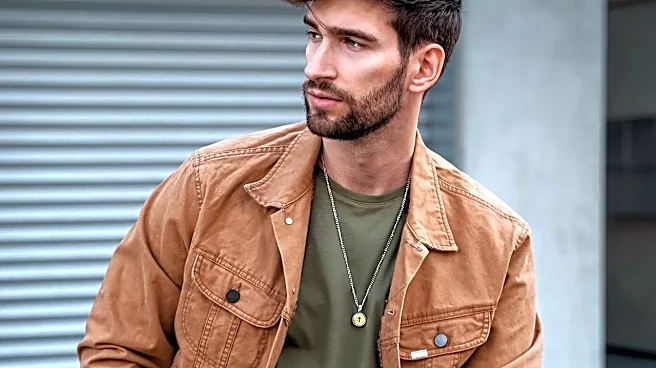






It’s a silhouette you know instantly: four pockets, a belted waist, and a go-anywhere attitude. The safari jacket is a fashion constant, but how did this piece of military gear become a timeless style icon beloved by everyone?
Born From Necessity
The safari jacket's story
begins not on a runway, but in the heat and dust of colonial-era Africa. British soldiers stationed there during the late 19th and early 20th centuries, including during the Second Boer War, needed practical, lightweight uniforms. The result was a garment made from breathable cotton drill or poplin in a khaki color that blended with the landscape. Its design was pure function: four large 'bellows' pockets for carrying essentials like maps and tools, shoulder epaulettes, and a belt to cinch the waist. This uniform, designed for survival and utility in harsh conditions, was the direct ancestor of the jacket we know today.
The Adventurer's Uniform
After its military service, the jacket was adopted by a new kind of pioneer: wealthy Western explorers and big-game hunters. Figures like author Ernest Hemingway, who commissioned his own custom 'bush jacket' in 1936, cemented its association with rugged, worldly masculinity. Hollywood then took this image and broadcast it to the world. Clark Gable wore one with swagger in the 1953 film 'Mogambo', as did Gregory Peck in 'The Snows of Kilimanjaro'. The safari jacket was no longer just a piece of clothing; it was a symbol of adventure, romance, and a life lived far from the ordinary.
The Saint Laurent Revolution
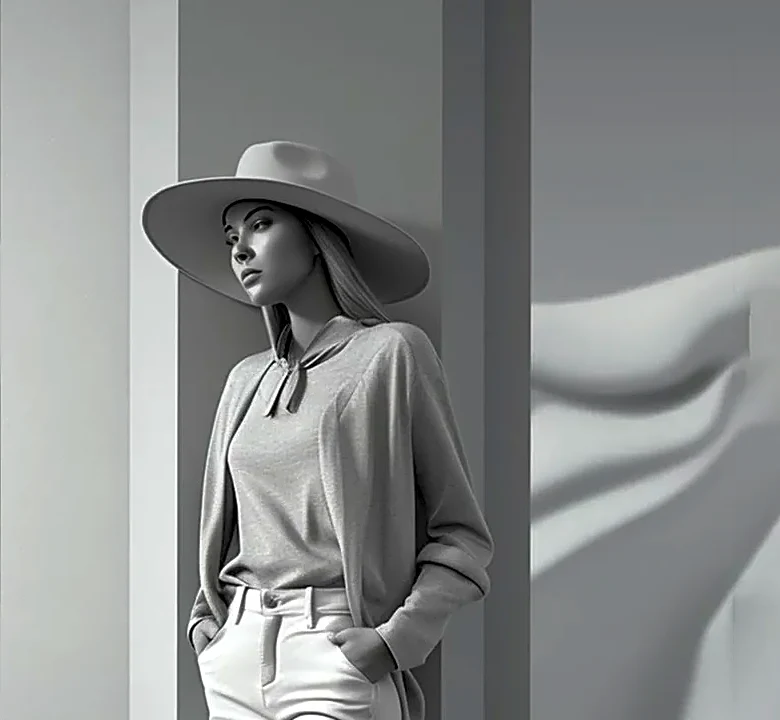
The jacket's most significant transformation came in 1968. Designer Yves Saint Laurent, inspired by the utility wear of the Afrika Korps and explorers, took the safari jacket and reimagined it for women. As part of his 'Africa' collection, he introduced the 'Saharienne'. This version, first created for a famous Vogue Paris photoshoot, was more than a simple copy; it was a reinterpretation. Saint Laurent refined the proportions for the female form, used fabrics like cotton gabardine, and turned a masculine, colonial garment into a symbol of chic, androgynous freedom. It was a revolutionary act that moved the jacket from the field to high fashion, making it available in his Rive Gauche boutiques and cementing its status as a permanent style fixture.
A Modern Wardrobe Staple
So why does it endure? The safari jacket's persistence comes down to its perfect marriage of form and function. Those four pockets are genuinely useful, providing ample storage for modern essentials like a phone and wallet. Its classic silhouette is incredibly versatile, capable of being dressed up over a shirt or dressed down with a t-shirt, serving as an alternative to a traditional blazer. Made from lightweight fabrics like linen or cotton, it's an ideal layering piece for spring and fall. Modern designers continue to reinterpret it with new fabrics and cleaner lines, but the core elements remain because they simply work. It exists at a rare intersection of style and utility, looking as good as it performs.