


Resisting the Festival Formula
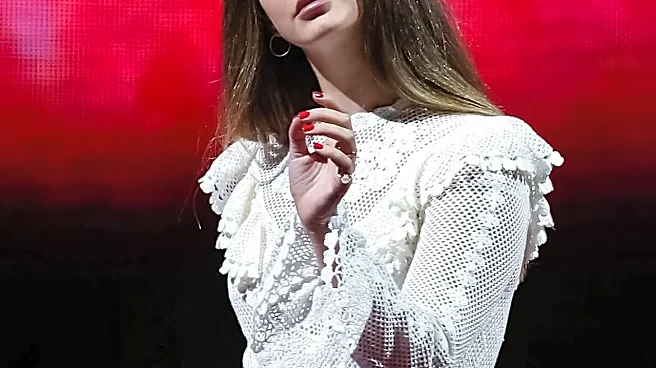
In an era where festival headliners often rely on relentless bass drops, pyrotechnics, and high-tempo choreography, Lana Del Rey’s approach feels like an act of quiet rebellion. She doesn’t burst onto the stage; she drifts into view, often to a slower,
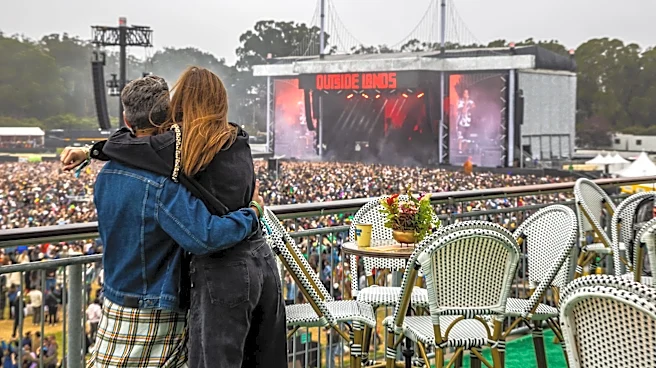
more atmospheric opening. The goal isn’t to jolt the audience into excitement, but to lure them into a mood. This was perfectly demonstrated during her last headlining performance at the park’s Outside Lands festival. Instead of a high-energy spectacle to compete with other stages, she offered a set built on atmosphere and deliberate pacing. She trades overwhelming spectacle for a sustained, hypnotic spell, asking thousands of fans to lean in and listen, rather than just react. It’s a gamble that pays off, creating a shared sense of intimacy that feels almost impossible in a sprawling field.
A Stage Set for a Close-Up
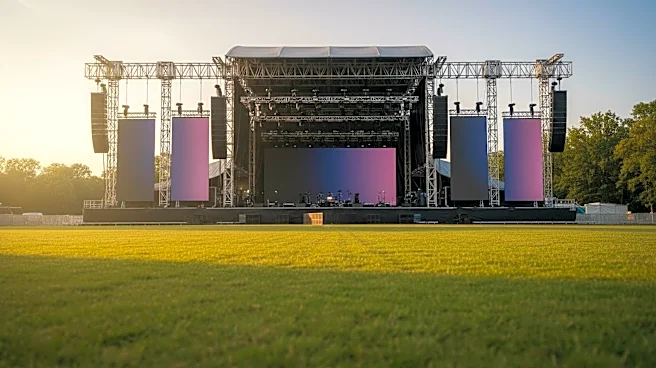
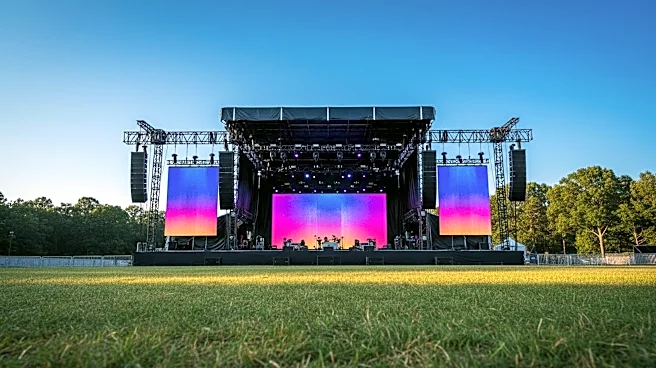
The power of Del Rey’s performance lies in its commitment to a singular, cohesive vision that feels more like a vintage film set than a concert stage. During her celebrated Golden Gate Park appearance, the stage was framed by elements that suggested a faded Hollywood glamour. Descriptions from the event noted pearly sheets billowing from arched window frames, almost like portals into another world. Grainy, home-video-style footage played on screens behind her, reinforcing the sense of nostalgic melodrama that defines her work. This is the “minimalism” in action: every prop serves the narrative. There are no distracting lasers or confetti cannons. The stage becomes a self-contained universe, with Del Rey at its serene center, often surrounded by contemporary dancers whose movements add to the storytelling rather than just providing energy. The effect is that even from hundreds of yards away, the audience feels like they’re watching an intimate, art-house film unfold.
Melancholy as a Communal Experience
It seems counterintuitive that songs steeped in themes of sadness, complicated love, and disillusionment would unite a massive festival crowd, but Del Rey has turned melancholy into a communal experience. Her fans don't just know the words; they inhabit the emotions. At her Golden Gate Park show, a sea of people sang along to every self-deprecating and poetic line, from early career hits like “Summertime Sadness” to deeper album cuts. The performance becomes a dialogue. She offers a mood, and the audience reflects it back, creating a feedback loop of shared feeling. Her voice, often described as both whispery and powerful, cuts through the night air, turning personal anthems into public hymns. This isn’t the explosive joy of a pop anthem; it's the deeper, more profound connection that comes from acknowledging a shared vulnerability, a feeling that resonates powerfully across a massive, captivated audience.
The Lasting Cinematic Image
Ultimately, a Lana Del Rey festival set succeeds because it leaves the audience with a series of unforgettable, cinematic images. It’s Del Rey sprawled across a piano, crooning under a single spotlight. It's her being lifted by dancers during a song’s emotional peak, a moment of choreographed surrender that translates beautifully on the large video monitors for those in the back. It's the simple but powerful message of “God Bless You San Francisco” illuminating the stage against the city’s natural fog. These aren't just moments in a concert; they are carefully constructed scenes. She understands that in the age of social media, the most powerful performance is one that is not just heard but also seen and felt as a distinct aesthetic. She doesn’t just play songs; she creates a world and invites you in, proving that in the wide-open space of Golden Gate Park, a quiet, cinematic story can be the most resonant one of all.