



The 2011 caper 'Tower Heist' uses the Macy's Thanksgiving Day Parade as the backdrop for a daring robbery. But could a crew of disgruntled employees really use the festive chaos to steal a Ferrari? Let's break it down.
The Empty Building Fantasy
The heist's central premise relies
on the 'Tower', a luxury high-rise on Central Park West, being mostly deserted for the Thanksgiving holiday. In the film, this gives the crew, led by Ben Stiller's character Josh Kovaks, freedom to operate. The reality is quite different. Buildings along the parade route, especially those with premium views, are far from empty. They become highly sought-after venues for private parade-watching parties. Residents host family and friends, and exclusive rentals for the day are common. Far from a ghost town, the building would be bustling with occupants and their guests, creating a high-traffic environment where strangers with duffel bags and suspicious equipment would stick out immediately. Any unusual activity would be noticed not just by security, but by dozens of partygoers with smartphones.
Using the Crowd as 'Cover'
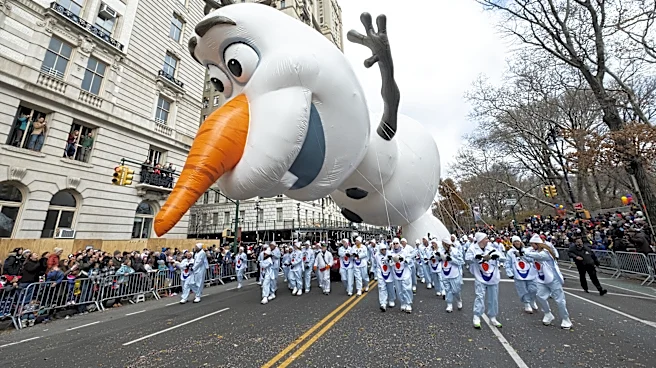
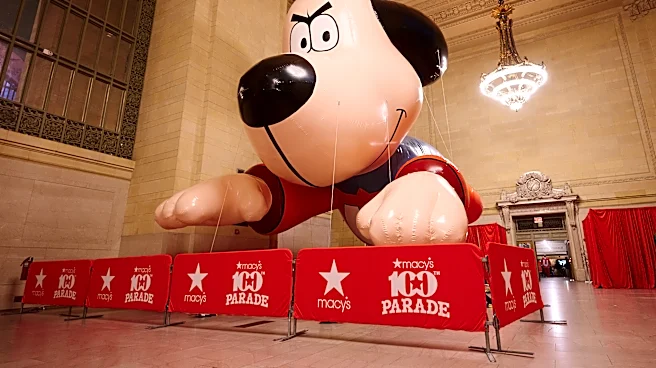
In classic heist fashion, the movie's crew plans to use the parade's massive crowd as a form of cover. The logic is that with millions of people packed onto the streets, no one will notice their scheme. However, the sheer scale of the event creates the opposite effect. The parade route is one of the most heavily policed areas on the planet for those few hours. An immense security apparatus, involving thousands of NYPD officers in uniform and plainclothes, descends on the area. The route is lined with nearly six miles of steel barricades and heavy concrete barriers to keep spectators out of the street and prevent unauthorized vehicle access. Sand-filled sanitation trucks are positioned at intersections to block any potential vehicle-ramming attacks. Moving heavy equipment through these 'frozen zones' would be impossible without drawing immediate attention from law enforcement specifically trained to spot anything out of the ordinary.
The Rooftop and the Golden Ferrari
The film's most audacious set piece involves lowering the villain's prized possession, a vintage Ferrari made of gold, from the penthouse apartment to a flatbed truck below. This is already a logistical nightmare, but doing it during the parade adds another layer of impossibility. The airspace above the parade is highly restricted. NYPD aviation units and drones constantly monitor the area from above. Furthermore, police sharpshooters and counter-sniper teams are stationed on rooftops along the entire route, scanning windows, balconies, and rooftops for any potential threats. A team of amateurs attempting to operate a crane or pulley system from the top of a prominent high-rise would be spotted within seconds. They wouldn't just be contending with ground-level security; they'd be under intense surveillance from the air and surrounding buildings.
Blending in with a Rogue Float
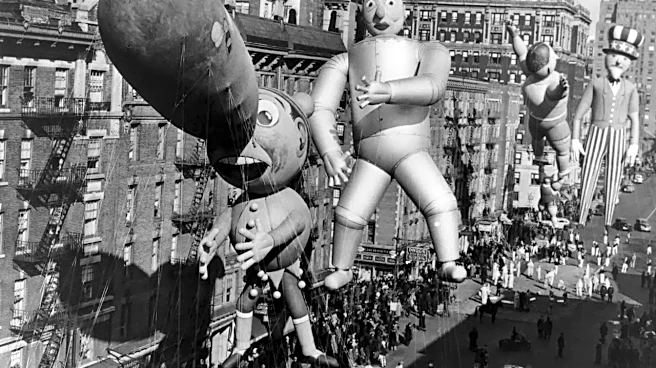
The crew's getaway plan involves disguising their haul as an official parade float and simply driving away in the procession. This shows a fundamental misunderstanding of how parade logistics work. Floats are not random additions; they are part of a meticulously planned, months-long process. Each float is designed, built, and vetted by the Macy's Parade Studio team, often in partnership with corporate sponsors. They are constructed to specific dimensions, allowing them to be transported collapsed through the Lincoln Tunnel from their New Jersey warehouse and reassembled overnight. The lineup is precise, and every vehicle and participant is accounted for. An unsanctioned, unvetted float appearing out of nowhere would trigger an immediate security response. There is no 'blending in' with a rogue element in an operation this tightly choreographed.