







A Perfectly Balanced Stalemate
Heading into the final day of Group H matches, Japan and Senegal were in a strong position, tied at the top with four points each after one win and one draw. Their head-to-head match had ended in a thrilling 2-2 draw. Colombia was close behind with three
points, while Poland was already eliminated. The final matches were held simultaneously: Japan played Poland, and Senegal faced Colombia. To advance, both Japan and Senegal simply needed a win or a draw. A loss, however, opened the door for a complicated and ultimately heartbreaking scenario.
Final Day Drama in Two Cities
The drama unfolded across two stadiums. In Samara, Colombia scored against Senegal in the 74th minute, putting them ahead 1-0. That result meant Colombia would win the group. Meanwhile, in Volgograd, Japan went down 1-0 to Poland. With both games ending 1-0, a bizarre situation emerged. Colombia finished first in the group with six points. Japan and Senegal were now deadlocked for second place. Both had four points. Both had a goal difference of zero. Both had scored four goals and conceded four goals across their three games. They were, for all intents and purposes, perfectly tied.
Digging Deep into the Rulebook
When teams are this evenly matched, FIFA has a series of tiebreakers. The first is overall goal difference, which was level. The second is overall goals scored, which was also level. The next tiebreaker is the head-to-head result between the tied teams. But since Japan and Senegal had drawn 2-2, this couldn't separate them either. This forced officials to go to the seventh tiebreaker on the list, a mechanism that had never before been used to eliminate a team from a men's World Cup: the fair play rule.
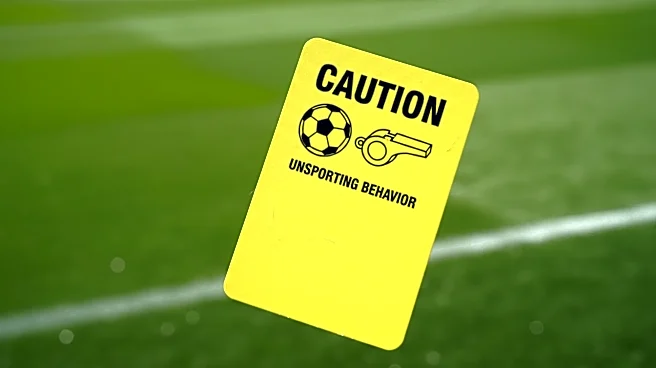
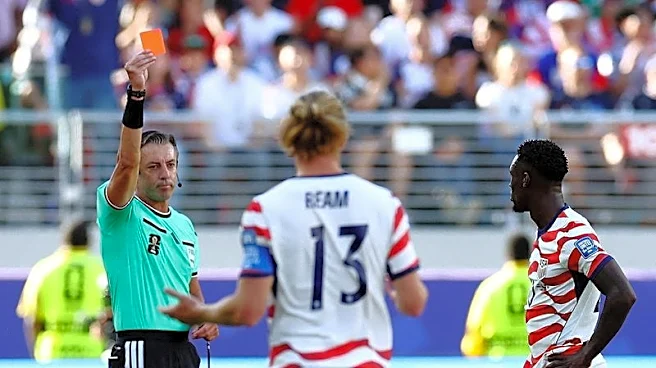
Counting the Cards
The fair play rule is essentially a disciplinary scorecard. Teams lose points for infractions: one point for a yellow card, three for an indirect red card (two yellows), four for a direct red card, and five for a yellow card followed by a direct red. The team with the better score—that is, the fewest deductions—advances. Tallying up the cards from their three group matches, Japan had received four yellow cards, for a fair play score of minus-four. Senegal had received six yellow cards, for a score of minus-six. That two-card difference was it. Japan advanced to the knockout round, and Senegal, the last African team remaining in the tournament, was sent home.
An Ironic and Controversial Legacy
The outcome was immediately controversial, not just for the brutal math but for how the final minutes of Japan's match played out. Aware of Colombia's goal, the Japanese team chose to stop attacking and simply pass the ball around, running out the clock and protecting their slim fair play advantage, knowing a 1-0 loss was enough if Senegal also lost. This led to accusations that Japan's strategy was the opposite of 'fair play'. The Senegalese Football Federation lodged a complaint with FIFA, arguing the rule incentivized a team to refuse to play. While FIFA defended the rule as a better alternative to the final tiebreaker—drawing lots—the incident remains a stark and debated piece of World Cup history, a moment when the game was decided not on the pitch, but by the referee's notebook.