




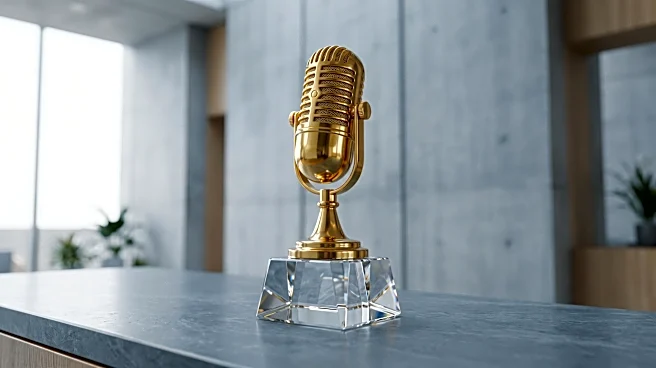

Welcome to the 'Oscars of Audio'
The transformation of podcasting from a niche hobby into a mainstream entertainment pillar is on full display at The Ambies, the annual Awards for Excellence in Audio. Hosted by The Podcast Academy—an organization explicitly modeled after the institutions
that govern the Oscars and Grammys—the event has become the industry's premiere night. Since its inception in 2020, The Ambies has sought to elevate podcasting's cultural status, and it succeeds by borrowing the very framework of old-media glamour. The most recent ceremony, held in Brooklyn, was hosted by comedian Wyatt Cenac and featured a slate of celebrity presenters, underscoring the medium's growing convergence with Hollywood. But the real story isn't just the professional sheen; it's the formal recognition of a new kind of celebrity.
Meet the New A-List
Who is a podcast star? It’s not just a recognizable voice, but a personality who commands a loyal, almost intimate, relationship with millions of listeners. Think of Kara Swisher, who was honored with the Governors Award at the 2026 Ambies for her significant influence on the industry. Or consider Pablo Torre, named the inaugural Vanguard Podcaster of the Year for expanding his influence far beyond audio. This new A-list includes investigative journalists like Patrick Radden Keefe, relatable advice-givers like Mel Robbins, and culture commentators like Matt Rogers and Bowen Yang of 'Las Culturistas'. Unlike movie stars, who are often distant and curated, podcast stars build their fame on authenticity and access. Their authority comes not from a studio but from the trust they build, episode by episode, directly into the ears of their audience.
From Niche to Mainstream
Awards like The Ambies do more than just hand out trophies; they formalize and legitimize the industry in the eyes of advertisers, investors, and the broader public. By creating categories like Best Host and Podcast of the Year, The Podcast Academy provides a clear benchmark for excellence. This structure helps attract top-tier talent and bigger production budgets, fueling a cycle of growth and professionalization. When a show like NPR's 'Wild Card with Rachel Martin' wins for Best Host, it sends a signal about what quality sounds like. This move toward a more structured, high-stakes industry mirrors the evolution of film and television, where awards helped turn nascent art forms into commercial powerhouses. For podcasting, The Ambies are a declaration that it's no longer the wild west but a territory with established landmarks and bona fide stars.
The Indie Spirit at a Crossroads
However, the rise of a star system presents a potential paradox for a medium celebrated for its independent spirit. Early critics of The Podcast Academy worried it might favor established networks over the indie creators who built the medium from the ground up. The organization has made efforts to recognize independent work, introducing a category for Best Indie Podcast. Yet, as the industry consolidates and multimillion-dollar deals for top talent become more common, there's a tangible fear that the quirky, experimental, and deeply personal shows could get lost in the shadow of slick, high-budget productions. The very glamour that legitimizes podcasting in the mainstream could risk sanitizing the raw, unfiltered energy that made so many people fall in love with it in the first place.