






The Magic of the 45-Degree Angle
Before we get into the glamour, let's talk geometry. Most fabrics are cut on the straight grain, following the vertical or horizontal threads of the weave. The bias cut, however, slices the fabric at a 45-degree angle. This simple shift is revolutionary
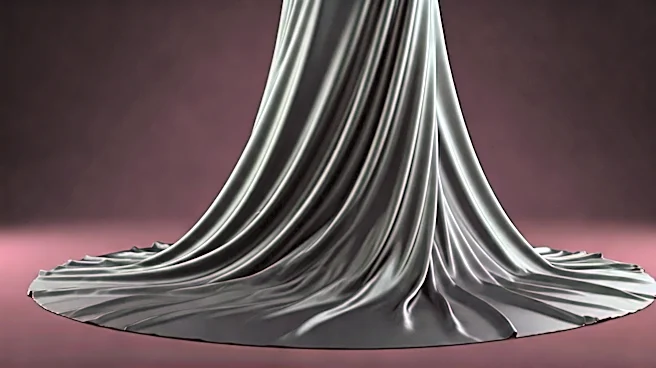
because it unlocks the fabric's natural elasticity and drape. Even a non-stretch material like silk satin gains a surprising amount of 'give' and fluidity, allowing it to skim the body's curves rather than restricting them. This is the secret to that coveted, body-molding silhouette that seems to float and flow with the wearer.
A Revolution Born in the 1920s
The technique was pioneered and popularized by French couturier Madeleine Vionnet in the 1920s and 30s. Often called the 'architect of fashion,' Vionnet sought to free women from the rigid corsets of the previous era. Inspired by ancient Greek statues and the free-flowing movement of dancer Isadora Duncan, she used the bias cut for entire garments, a radical move at the time. Her designs didn't force the body into a shape; they celebrated its natural form. This new, sensual silhouette quickly became the look of 1930s Hollywood, defining the glamour of stars like Greta Garbo and Marlene Dietrich.
Satin: The Perfect Canvas
While the bias cut can be used on various materials, it finds its perfect partner in satin. Satin itself is a type of weave, not a fiber, where yarns float across the surface to create its signature gloss and a duller back. This high-sheen surface dramatically catches the light, and when cut on the bias, it creates a mesmerizing play of light and shadow that accentuates the fabric's liquid drape. The combination is pure alchemy: the technical skill of the cut enhances the inherent luxury of the fabric, resulting in a garment that looks and feels like a second skin. The fluid nature of bias-cut satin is what gives it that effortless, expensive-looking flow.
The Ultimate Test of a Couturier's Skill
So why is this nearly century-old technique a fixture at Paris Haute Couture Week, the pinnacle of fashion craftsmanship? Because it's incredibly difficult to master. Fabric cut on the bias is unstable; it stretches, warps, and shifts on the cutting table and under the needle. It requires immense patience and skill from the artisan, who must understand exactly how the fabric will behave. It's also a more wasteful process, as fewer pattern pieces can be cut from a rectangular roll of fabric. In the world of haute couture, where houses showcase their highest level of artistry, executing a perfect bias-cut gown is a statement. It signals an investment in time, skill, and luxurious materials—the very definition of couture.
An Enduring Icon on the Runway
From John Galliano's iconic slip dresses in the '90s to the modern runways of Schiaparelli, Chanel, and Armani Privé, the bias-cut satin gown continues to be a designer favorite. During the Fall/Winter 2025-2026 couture shows, satin appeared in various forms, reinforcing its status as a go-to luxury fabric. It's a silhouette that is at once classic and modern, capable of conveying both Old Hollywood glamour and contemporary ease. Designers return to it again and again because it delivers what couture promises: unparalleled beauty, masterful construction, and a timeless elegance that transcends fleeting trends. It's not just a dress; it's a piece of fashion history that continues to feel utterly new.