

1. The '& Friends' Factor
At Newport, a guest appearance is rarely a simple superstar walk-on. It’s a curated, meaningful collaboration. Sets billed as “& Friends,” like those seen from artists such as Hayley Williams or Nathaniel Rateliff, aren't just a surprise party; they are a public
display of the festival's tight-knit artistic community. A fellow songwriter might emerge to add a new harmony to a beloved chorus, or an instrumentalist from another band might join for a single, perfect solo. This choice transforms a solo set into a communal celebration, making the performance feel expansive and deeply rooted in the festival's collaborative spirit.
2. The Single-Mic Huddle
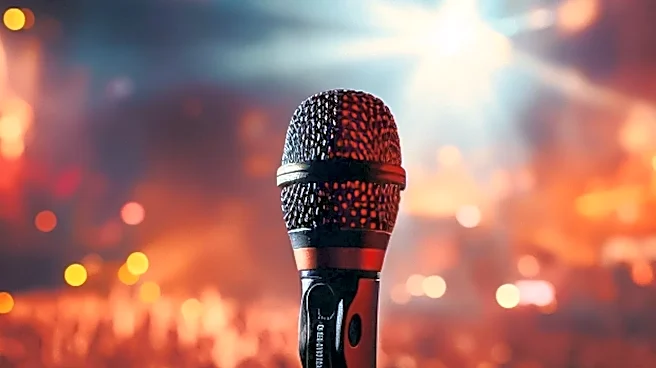
You'll see it every year: a band pushes their individual microphones away and gathers around a single condenser mic, leaning in over their instruments. This isn't just for a vintage aesthetic. It forces the musicians to listen to each other intently, balancing their sound acoustically, in real time. For the audience, it creates a powerful visual focal point, drawing thousands of eyes to one intimate spot on a huge stage. The act of huddling together makes a quiet song feel like a precious secret being shared.
3. The Full-Band Dropout
One of the most effective ways to create a huge impact is to suddenly take almost everything away. Picture a full band roaring through a song, only to have every instrument cut out, leaving a single, unadorned voice hanging in the air. That moment of near-silence makes the entire 10,000-person crowd at Fort Adams lean in, holding their breath. When the band crashes back in, the sound feels twice as powerful. It’s a masterful use of dynamics that trades brute force for dramatic tension and release.
4. The Reverent Cover Song
Covering another artist's song at Newport is different. It’s a way of speaking to the ghosts of folk history that permeate the grounds. When artists like Gillian Welch and David Rawlings take on the Grateful Dead songbook, or the finale brings back a protest anthem, they are connecting their set to a lineage. The choice of cover is crucial; it’s a nod to the influences that shaped them and a recognition of the musical ground they stand on, adding a layer of historical weight to their own performance.
5. The Choir of Thousands
A Newport singalong is not a half-hearted request from the stage. It's often a central part of the arrangement. An artist might take the time to teach the crowd a specific harmony or a call-and-response part, effectively turning 10,000 fans into a temporary choir. When folk legend Joan Baez led a stage full of artists and the entire audience in "America the Beautiful" in 2026, it wasn't just a song; it was the climax of the entire weekend, a moment of true, shared performance.
6. The Story Behind the Song
Banter is common at any concert, but at Newport, it’s often elevated to narrative. An artist might pause to tell a detailed, personal story about the inspiration for the next song—a piece of family history, a political observation, or a funny anecdote from the road. This isn't filler; it's a production choice that imbues the music with deeper meaning. By the time the first chord is struck, the audience isn't just hearing a song; they are hearing a story they've been personally invited into.
7. The Generational Duet
Few things feel more unique to Newport than seeing a living legend share the stage with a rising star. It could be an 84-year-old bluegrass master like Peter Rowan trading verses with a young mandolin prodigy, or a folk icon like Joan Baez bringing out a contemporary artist like Brandi Carlile. This isn't just a guest spot; it's a visual and sonic representation of folk music's ongoing story—a passing of the torch that honors the past while enthusiastically embracing the future.
8. The Power of the Unplugged
More extreme than the single mic, this is the moment an artist steps to the very front of the stage, away from all amplification, and performs a song completely acoustically. The security guards still the crowd, the harbor quiets, and the song is carried only by the air. It’s a moment of supreme confidence in the song and the audience. In that quiet, the set becomes massive, not in volume, but in its shared, hushed intensity, creating an unforgettable "you had to be there" memory for everyone present.
9. Silence as the Loudest Note
In a festival setting, the temptation is to fill every second with sound. The bravest Newport performers do the opposite. They use silence as an instrument. A long, dramatic pause after a powerful lyric. A few extra beats of quiet between the end of one song and the start of another. This creates a sonic vacuum that focuses the entire audience's attention. It's a technique that commands respect and allows the emotional weight of the performance to settle before moving on.
10. Playing to the Fort Itself
The most seasoned Newport artists understand that the venue is a part of the show. They don’t just play to the fans in front of them; they play to the historic stone fort, the sailboats bobbing in the harbor, and the festival's legacy. This can be as simple as a shout-out to the “boat people” or as subtle as choosing a sea shanty that feels right at home on the Narragansett Bay. It acknowledges the unique environment and makes the performance feel like it could only happen right here, right now.