
Beyond the spectacle of 'Defying Gravity' lies a story rich with hidden details. Unlocking the genius of 'Wicked' is about spotting the clever motifs woven through its color, costumes, and music, turning
every viewing into a new discovery.
A Story Told in Green and Pink
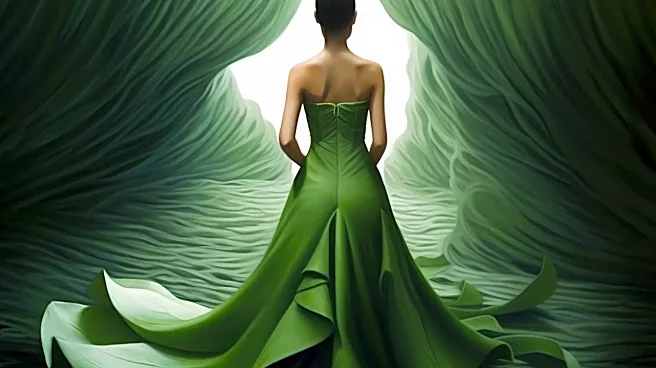
From the moment Elphaba is born, her green skin defines her. In the world of Oz, green is the color of otherness, a visual marker of prejudice that sets her apart. It symbolizes the societal assumption that she is different, and therefore, 'wicked'. But green also represents her deep connection to nature, her personal growth, and eventually, her power. The Emerald City itself is a dazzling, superficial green, hiding the corruption of the Wizard's regime and illustrating the theme that appearances can be deceiving. In stark contrast is Glinda, whose world is painted in shades of pink, blue, and glittering white. These colors initially represent her bubbly, privileged femininity and desire for social approval. Pink embodies her longing to be seen as good and worthy, a perfect counterpart to Elphaba's struggle for acceptance. The visual tension between Elphaba's dark, earthy tones and Glinda’s bright, ethereal palette is the primary visual language of the show, a constant reminder of their opposing worlds and the core conflict between conformity and rebellion.
Wardrobe as Destiny
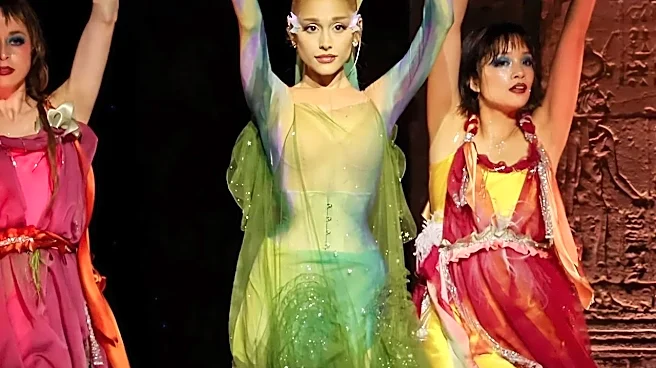
The costumes in 'Wicked' are far more than just clothing; they are a roadmap of character evolution. At Shiz University, Elphaba and Glinda's contrasting uniforms—Elphaba's modest and ill-fitting, Glinda's fashionable and tailored—immediately establish their social standing. As Elphaba embraces her power, her clothing becomes more structured and bolder, evolving from a simple black dress into a more gothic, powerful silhouette that reflects her strength and resilience. The iconic pointy hat, gifted to her ironically by Glinda, is transformed from a joke into a symbol of her chosen identity. Glinda's journey is also told through her gowns. Her dresses become increasingly elaborate and shimmering as she ascends the social ladder, culminating in the famous 'bubble dress'. This gown, with its layers of iridescent blue, pink, and lavender silks, is designed to look like a magical, swirling soap bubble, representing her manufactured image of 'Goodness' and her role as a public figurehead. Costume designer Paul Tazewell intentionally designed their outfits to mirror their inner worlds, with Glinda’s reflecting airiness and social polish while Elphaba’s draw from natural, earthy inspirations like mushrooms.
The 'Unlimited' Echo in the Score
Stephen Schwartz’s score for 'Wicked' is a masterclass in musical storytelling, built around a series of recurring musical themes, or leitmotifs, that unify the entire show. The most significant of these is what Schwartz calls the 'Unlimited' theme, a seven-note melody that subtly echoes the opening phrase of 'Somewhere Over the Rainbow' from 'The Wizard of Oz'. This theme represents Elphaba's hope, her dreams of a future without limits, and her true inner power. We first hear it clearly when she sings 'The Wizard and I', envisioning a future where she is accepted and celebrated. The motif reappears in key moments, weaving through 'Defying Gravity' as she finally seizes her own destiny and, most poignantly, forming the melodic heart of 'For Good', the farewell duet between her and Glinda. Another key motif is the ominous, Rachmaninoff-inspired theme for the 'Wicked Witch,' first heard in 'No One Mourns the Wicked'. Schwartz cleverly reuses this dark theme, playing it softly and romantically during Elphaba and Fiyero's love song, 'As Long As You're Mine', showing how the same musical idea can convey terror or intimacy depending on the context.