





Your Brain Is Wired for Sideways Scares
There's a biological reason that thing you 'thought' you saw in the shadows sends a more potent chill down your spine than the ghoul in plain sight. Our brains are hardwired to pay special attention to the periphery. In evolutionary terms, the rustle
in the bushes was always more of an immediate threat than the predator you could see head-on. Studies have shown that our brains can react to fearful stimuli in our peripheral vision in as little as 80 milliseconds, triggering an alert response before we're even consciously aware of what we've seen. This is a primal survival instinct. While our central vision is for detail, our peripheral vision is for motion and threat detection. Halloween exploits this perfectly. The best scares aren’t about what’s in the spotlight, but what’s flitting just outside of it.
Horror's Masterclass in Misdirection
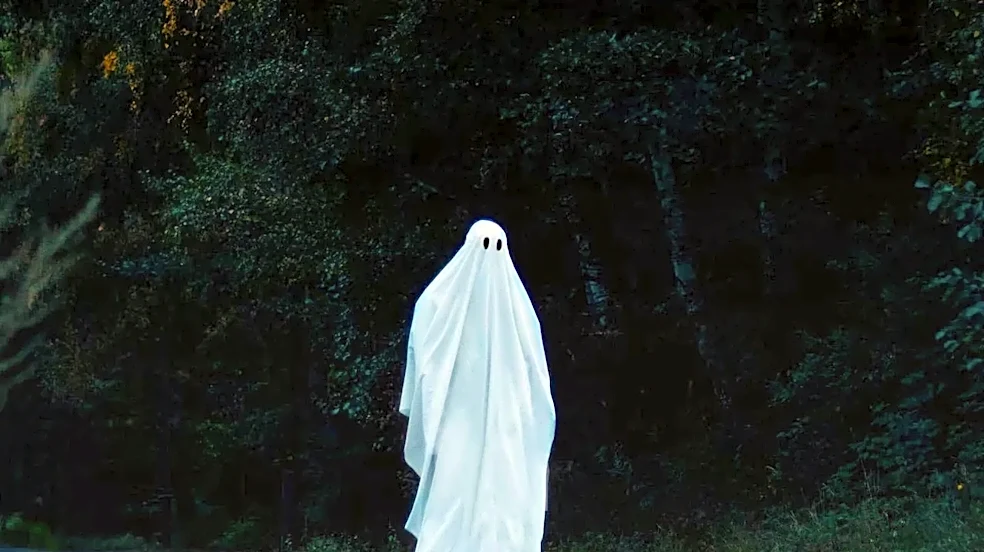
Horror filmmakers are masters of this 'edge of the frame' terror. Think of scenes where the camera holds on a character's face while, just over their shoulder and out of focus, a figure slowly appears in a doorway behind them. The audience sees it, but the character doesn't. Your brain screams 'danger!' long before the jump scare arrives. This technique is more effective than a sudden loud noise because it builds a dreadful anticipation. It uses negative space—dark hallways, open closets, a sliver of an unlit room—to make our own imaginations do the heavy lifting. Sound design plays a crucial role in this misdirection. A creak to the left makes you scan that side of the screen, leaving you vulnerable to the scare that emerges from the right. It's a psychological sleight of hand, guiding our attention to create a blind spot where fear can fester.
The Haunted House Blueprint
This principle is the very foundation of a great haunted attraction. They are not just a series of rooms with monsters; they are carefully engineered environments designed to manipulate your focus. Designers use narrow corridors to create a feeling of being trapped, forcing your attention forward while actors wait in unseen alcoves. They use sound and lighting to draw your eye to one corner of a room, just as a scare actor lunges from the other. The strobe light isn't just disorienting; it creates fractured moments where your brain can't quite process everything it sees, leaving terrifying afterimages at the edge of your perception. The entire experience is a physical manifestation of peripheral fear, forcing you to constantly check your six and question the stability of the space around you.
Finding Catharsis in Controlled Chaos
So why do we actively seek out these experiences that prey on our deepest instincts? The answer lies in catharsis. Halloween provides a safe, controlled environment to confront fear. The monster at the edge of the frame in a movie or a haunted house triggers a genuine fight-or-flight response—the adrenaline rush, the pounding heart—but without any real danger. It’s a simulation. This allows us to practice our fear response and feel the exhilarating relief of survival afterward. In a world full of abstract, real-world anxieties that often lurk at the edge of our own lives, the tangible, containable fears of Halloween feel manageable. We can face the shadow in the corner, scream, laugh, and then go home. It’s a form of emotional release, turning our primal anxieties into a communal, celebratory performance. The fear isn’t the point; the mastery of it is.