




A Table Full of Promise
Barry Levinson’s 1990 masterpiece 'Avalon' is a semi-autobiographical story about his own Russian-Jewish family, the Krichinskys, making their way in Baltimore. The film’s early scenes are filled with the vibrant energy of a sprawling immigrant clan.
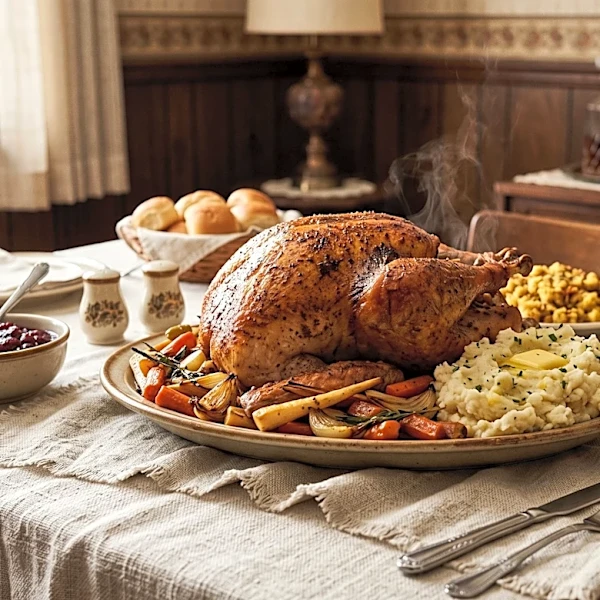
The first Thanksgiving dinners are loud, crowded affairs. Dozens of family members pack into a row house, tables are pushed together, and patriarch Sam Krichinsky (Armin Mueller-Stahl) holds court, telling the well-worn story of his arrival in America on the Fourth of July. These gatherings represent the peak of the family’s unity. They are a self-contained world, bound by shared history, language, and obligation. They contribute to a shared fund to bring more relatives over from Europe. Thanksgiving, an adopted American ritual, is embraced as another reason to be together, even if the matriarch, Eva, wonders aloud who exactly they are supposed to be thanking. At this stage, the family is the center of their universe, a powerful support system against the challenges of a new world.
'You Cut the Turkey Without Me?'
The film’s most iconic and pivotal scene happens at a later Thanksgiving. Sam's son, Jules (Aidan Quinn), and his wife, Ann (Elizabeth Perkins), have achieved a measure of success. They’ve moved to the suburbs, a world away from the tight-knit city neighborhood of Avalon. When Sam’s brother Gabriel (Lou Jacobi) and his wife finally arrive after the long drive, they are horrified to discover the family has already started eating. Gabriel’s anguished cry, 'You cut the turkey without me?' is more than just hurt feelings over a meal. It’s a profound recognition that the old rules no longer apply. The tradition of waiting for everyone, a symbol of their collective identity, has been sacrificed for modern convenience and individualism. This single act creates a family feud that never heals, symbolizing the irreparable fractures that are appearing as the family assimilates and drifts apart. The promise of suburban prosperity comes at the cost of the solidarity that once defined them.
The Silent, flickering Centerpiece
Levinson masterfully contrasts the early, chaotic feasts with the Thanksgiving dinners of the next generation. As Jules and his cousin Izzy find success with their appliance store, another character enters the home: the television. At first, it's a curiosity the whole family gathers around to watch a test pattern. But soon, it becomes the focal point of the household. In one of the film's most melancholy scenes, we see Jules, Ann, and their son Michael eating Thanksgiving dinner on trays in the living room, their faces illuminated by the glow of the TV screen. The boisterous, multi-generational conversation of the past has been replaced by the passive silence of television viewing. The patriarch's stories have been supplanted by broadcast programming. This quiet, sterile meal is the visual culmination of their assimilation. They have achieved the American dream—a suburban home, financial security, modern appliances—but have lost the very connection and community they once cherished.
An American Elegy for What Was Lost
Through these Thanksgiving scenes, 'Avalon' presents a bittersweet elegy for the immigrant experience. The film doesn't condemn the pursuit of the American dream, but it poignantly questions its cost. Characters change their last names from Krichinsky to the more 'American' Kirk and Kaye to get ahead in business. The move from the close-knit city blocks of Avalon to the sprawling suburbs represents a physical and emotional distancing. Levinson seems to suggest that something vital is lost in this trade. As Sam reflects near the end of his life, after finding his old neighborhood completely gone, 'If I knew things would no longer be, I would have tried to remember better'. It’s a heartbreaking admission that the world he knew, built on family and tradition, has vanished. The very progress and prosperity they worked so hard for ultimately dismantled the structure that held them all together.