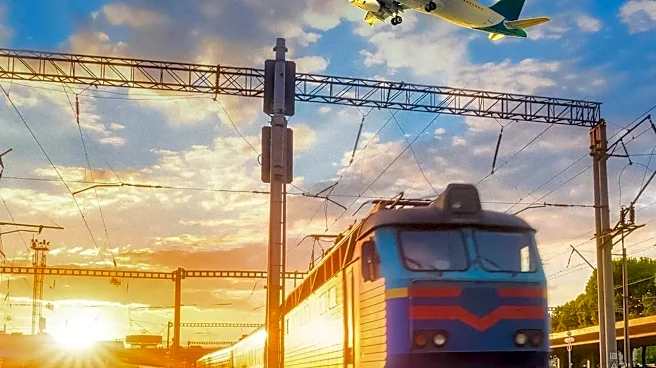







Every traveler has a horror story. A missed connection, lost luggage, a questionable motel. But which vessel of misery—the plane, the train, or the automobile—delivers the disasters that become the funniest stories? Let's investigate.
The Case for Planes: High-Altitude Humiliation
Air travel is a masterclass
in controlled chaos, making it a prime contender for comedic disasters. The stress is front-loaded, from the security theater to the gate-side scramble. But its funniest moments are born from being trapped in a metal tube with 200 strangers. Consider the 'Middle Seat Purgatory,' where you're wedged between a snorer and a chronic armrest hog. It's not just uncomfortable; it's a slow-burn sitcom episode at 30,000 feet. Then there's the 'Unforeseen Companions' scenario—being seated next to a talkative shower curtain ring salesman, as the classic 1987 film 'Planes, Trains and Automobiles' so perfectly illustrated. The sheer helplessness of a delayed flight that diverts to a random city hundreds of miles from your destination is peak travel absurdity. It's these moments of shared, powerless suffering that, in retrospect, become gut-bustingly funny.
The Contender: Trains and Their Unique Tragedies
Train travel has a romantic reputation that can quickly curdle into farce. Unlike a plane, a train's problems are often bafflingly terrestrial. The 'Unscheduled Stop in a Field' is a hallmark of this category. One moment you're gliding through scenic countryside; the next, you're stranded in a muddy pasture with no explanation. The absurdity lies in being so close to civilization, yet utterly stuck. There’s also the special flavor of delay unique to rail travel, where a 10-minute hold mysteriously blossoms into a two-hour standstill, announced only after the train was already supposed to have left. And let's not forget the social roulette of the dining car or the quiet car, where a single loud talker or a bizarre personal dispute can hold an entire carriage of people hostage. The slow-moving nature of train disasters gives them a uniquely agonizing, and therefore hilarious, quality.
The Champion: Automobiles and the Freedom to Fail
While planes and trains subject you to the whims of a corporation, the automobile puts the disaster squarely in your own hands—and that's where the real comedy gold is found. A road trip is a glorious exercise in freedom until it's not. The 'GPS Betrayal' is a modern classic: that moment your digital guide confidently directs you down a dirt path that turns into a swamp, or has you driving the wrong way down a highway. The cinematic potential is endless. The true king of automotive disasters, however, is the 'Rental Car Catastrophe.' It combines the unreliability of a machine you don't know with the high stakes of a looming credit card bill. As Neal Page discovered, these vehicles can be prone to catching fire from a stray cigarette or being a different, much worse car than the one you booked. The blend of personal responsibility and mechanical betrayal makes car disasters the most potent source of funny travel stories.
The Verdict: Why Cars Take the Crown
Planes offer the comedy of confinement, and trains provide the humor of helpless absurdity. But automobiles win because their disasters are self-inflicted epics. You are the captain of your own sinking ship. When a plane is diverted, it's the airline's fault. When a train breaks down, it's the operator's problem. But when you're standing on the side of a highway in the middle of nowhere because you tried to 'test' how far the car could go on empty, that story is yours and yours alone. You're not just a passenger in the disaster; you're the protagonist, the director, and the foolish narrator. The best travel stories are the ones where we make a series of questionable choices that lead to a hilarious, chaotic outcome. And for that, nothing beats the freedom and folly of the open road.