
From Sci-Fi to the Runway
Forget simple sequins and silk. Today’s most avant-garde fashion draws from far more fantastical sources. Imagine gowns that ripple like deep-sea jellyfish, corsets that mimic insect carapaces, and silhouettes
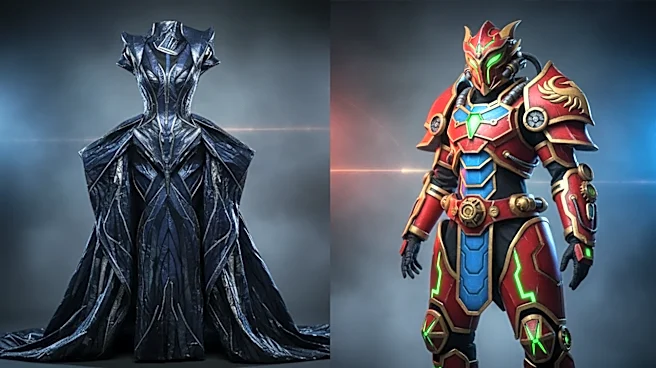
that look like they were grown in a lab rather than sewn in a studio. This is the world of bio-organic armor, a design movement that blends the natural world with futuristic fantasy. It’s a trend heavily influenced by decades of science fiction, from the biomechanical horrors of H.R. Giger’s Alien to the sleek, functional suits of Dune. On the red carpet, celebrities have embraced styles that blur the line between gown and protective shell, with sculptural breastplates and armor-like bodices becoming almost commonplace. This aesthetic isn't just about looking tough; it’s about embodying something otherworldly, powerful, and intricately complex, transforming the wearer into a piece of living art.
The Architects of Living Couture
No one embodies this movement more than Dutch designer Iris van Herpen. For years, her haute couture collections have served as a laboratory for fashion's future. Using cutting-edge technologies like 3D printing alongside delicate hand-craftsmanship, she creates garments that seem to be in motion, mimicking everything from splashing water to the magnetic fields of deep space. Her recent collections have drawn inspiration from exploding supernovae and sonic starquakes, turning abstract scientific concepts into wearable reality. Van Herpen collaborates with scientists and architects, using materials like bio-engineered silk and even living algae to push the boundaries of what a dress can be. She and other designers in the “biocouture” space are moving beyond mere inspiration from nature to active collaboration with it, creating textiles that are grown, not just manufactured.
Nature's Blueprint, Tech's Execution
At its core, this trend is a high-fashion expression of biomimicry: the practice of looking to nature to solve complex problems. Nature, after billions of years of R&D, has perfected materials and structures that are both incredibly strong and beautifully efficient. Think of the interlocking strength of nacre in a seashell or the flexible armor of fish scales. Designers are now using advanced technology to replicate these natural marvels. 3D printing allows for the creation of complex, interlocking exoskeletons that would be impossible to craft by hand, while biotech firms are developing lab-grown fabrics like synthetic spider silk and mushroom leather. This fusion of biology and technology allows for the creation of garments that are not only visually stunning but also point toward a more sustainable future for fashion, one that imitates nature’s circular systems.
A Shield for Modern Times
So, why armor, and why now? On one level, the rise of fantastical and protective fashion is a form of escapism. In turbulent times, the allure of fantasy and the comfort of a metaphorical shield are powerful motivators. Wearing a garment that looks like armor can instill a sense of power and courage in the wearer, a physical manifestation of inner strength. But it also speaks to our complex relationship with the future. These designs are simultaneously organic and technological, reflecting a world grappling with climate change while racing toward further automation and artificial intelligence. The bio-organic aesthetic is both a reconnection with the natural world and an embrace of the strange new one we are building. It’s a way of dressing for a future that feels both exciting and uncertain, arming ourselves with beauty and imagination.