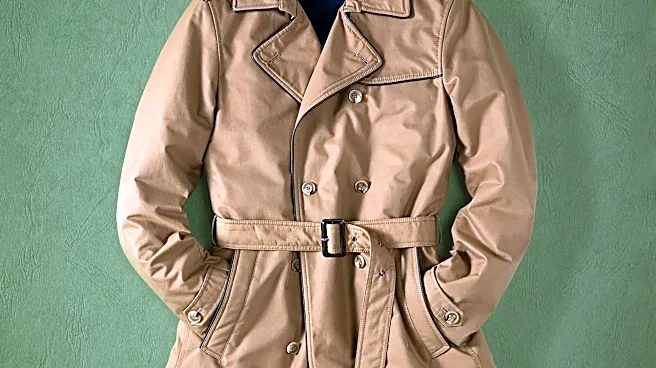









It’s a detail you may have never noticed, but once you see it, you can’t ignore it: the extra, cape-like layer of fabric across the shoulders of a classic trench coat. This isn't just decoration; it's a storm flap, and it does far more than you think.
A Detail Forged in the Trenches
To understand the storm flap—also called a storm shield—you have to go back to the trench coat’s origins. The garment gets its name from the trenches of World War I, where British officers needed something more practical than the heavy, long wool coats of the past. Companies like Burberry and Aquascutum developed lighter, water-resistant coats from fabrics like gabardine that were better suited for the grim conditions of the front line. Every single detail on these early coats served a purpose born of military necessity. Epaulettes held rank insignia, D-rings on the belt carried map cases or other equipment, and the storm flap had a critical job: keeping soldiers dry.
The Original Purpose: A Rain Gutter
The storm flap’s primary function was ingenious and simple. It acts as a small cape across the upper back and shoulders, the area most exposed to rain. When a person stands in a downpour, water runs down their shoulders. The storm flap was designed to catch that water and channel it away from the body, allowing it to drip harmlessly to the ground instead of seeping through the coat’s main back seam. This extra layer of fabric provided superior protection in wet weather, a crucial advantage in the notoriously damp trenches. Some sources also suggest the flap provided an element of ventilation, allowing air to circulate under the capelet and making the coat more comfortable during exertion.
More Than Just a Flap: Shaping the Silhouette
While its function is rooted in practicality, the storm flap has a profound aesthetic effect on how a trench coat looks from behind. Without it, the back of a trench would be a single, long, and often monotonous panel of fabric. The storm flap changes everything by introducing a horizontal line that visually breaks up this vertical space. This simple addition creates structure and architectural interest. It broadens the appearance of the shoulders, creating a stronger, more defined silhouette that hints at the coat's military heritage. The flap adds a layer of dimension and movement, catching the light and creating shadows that give the back of the coat depth and character. When the wearer moves, the flap can lift slightly, adding a dynamic, cape-like elegance to an otherwise utilitarian garment.
The Modern View: A Mark of Authenticity
Today, most trench coat owners aren’t navigating military campaigns, but the storm flap endures as a hallmark of quality and classic design. Its presence signals that the coat is a true trench, adhering to the form that was perfected over a century ago. While many modern jackets feature storm flaps over zippers for wind protection, the back storm shield on a trench is a specific nod to its history. It separates an authentic trench from a simpler 'trench-style' coat. In the modern view, this flap is less about fending off a battlefield storm and more about a commitment to timeless style. It’s a quiet detail that tells a story of function evolving into enduring fashion, making the back view of a trench coat as iconic as its front.