








When Paris Fell Silent
For decades, the American fashion industry operated on a simple model: copy Paris. Designers and manufacturers would travel to France, absorb the latest haute couture collections, and return home to create more affordable versions for the U.S. market.
But in June 1940, when German forces occupied Paris, that vital artery of inspiration was severed. The world's fashion capital went dark, creating a sudden and dramatic void. American designers were, for the first time, truly on their own. They could no longer look to Europe for direction and were forced to innovate, paving the way for a fashion identity born from necessity.
Patriotism by the Yard
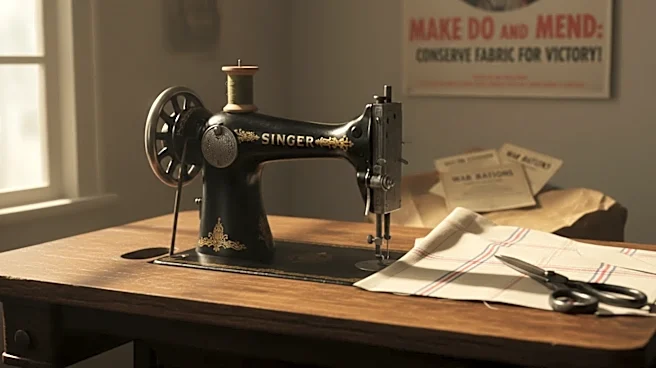
The war didn't just isolate America; it reshaped its industrial priorities. To support the war effort, the U.S. War Production Board implemented Regulation L-85 in 1942. This order wasn't about style; it was about saving material for military use. It set strict limits on fabric consumption, effectively outlawing extravagant details like wide hems, ruffles, patch pockets, and full skirts. Wool, silk, and nylon were redirected to make uniforms and parachutes. The L-85 rules forced manufacturers to produce simpler, more streamlined silhouettes. The military-inspired look, with its padded shoulders and sleeker lines, wasn't just a trend—it was a mandate that pushed fashion toward function.
A New Woman Needs a New Wardrobe
While men were fighting overseas, millions of American women entered the workforce, taking on jobs in factories and shipyards. This massive social shift created a new, practical need in women's wardrobes. The elaborate, high-maintenance fashions of the past were completely unsuitable for operating machinery or driving trucks. Women required clothing that was durable, safe, and allowed for freedom of movement. Slacks, coveralls, and simple wraparound dresses became commonplace not as a fashion statement, but as a uniform for a new kind of life. This practicality seeped into all aspects of dress, prioritizing comfort and ease in a way that perfectly aligned with the emerging sportswear aesthetic.
The Rise of the American Designer
Into this perfect storm stepped a new generation of uniquely American designers, most notably Claire McCardell. Unburdened by the traditions of Parisian couture, McCardell and her contemporaries like Bonnie Cashin designed for the lives of actual American women. McCardell championed the idea of "separates"—tops, skirts, and jackets that could be mixed and matched to create multiple outfits, a revolutionary and budget-friendly concept. She used humble, readily available fabrics like denim, cotton jersey, and even mattress ticking. Her famous "Popover Dress," designed in 1942, was a stylish wrap dress that a woman could wear to clean the house and then to a party. It was the antithesis of fussy European fashion. This was clothing built for living, not just for being looked at, and it defined what came to be known as the "American Look": casual, innovative, and democratic.