


The Age of Awe and Wonder
It all began with mashed potatoes. The iconic image from 1977’s *Close Encounters of the Third Kind*—Richard Dreyfuss’s Roy Neary manically sculpting Devil's Tower in his food—captured the essence of Spielberg’s early UFO fixation. This wasn’t about invasion;
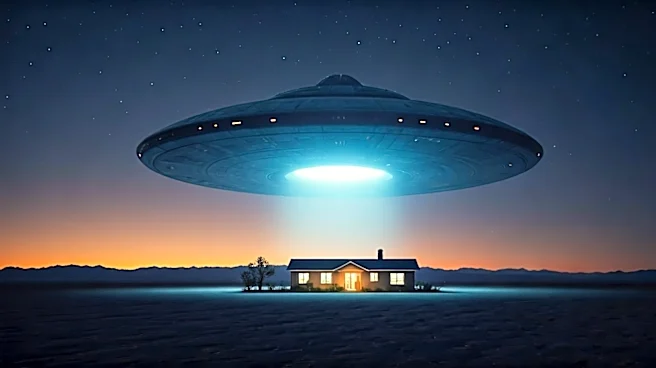
it was about obsession, wonder, and a spiritual need to connect. Fresh off the success of *Jaws*, Spielberg poured his childhood fascination with meteor showers and UFO sightings into a film that treated alien contact as a majestic, quasi-religious experience. The aliens in *Close Encounters* weren’t monsters. They were mysterious, musical beings who communicated through light and sound. The film tapped into a post-Watergate, pre-*Star Wars* zeitgeist, a moment when Americans, disillusioned with their government, looked to the cosmos not with fear, but with hope for something grander. It established Spielberg as the poet laureate of suburban awe, suggesting that the most profound event in human history might just happen in Muncie, Indiana.
The Alien as a Lost Child
If *Close Encounters* was about seeking the sublime, 1982’s *E.T. the Extra-Terrestrial* was about finding it in your closet. Spielberg famously conceived of the film as a deeply personal story about his parents' divorce, with the friendly alien serving as the friend a lonely child needed. This was a radical pivot. The alien was no longer a powerful, unknowable entity but a vulnerable, gentle creature needing protection from the cold, clinical world of adult authority. The villains in *E.T.* aren’t aliens; they’re faceless government agents, a theme that would resonate for decades. By turning the alien into a beloved family member, Spielberg cemented a powerful cultural idea: the benign visitor. He single-handedly shifted the pop-culture image of extraterrestrials from the invaders of 1950s B-movies to the misunderstood outsiders we should embrace. The film became a global phenomenon, proving that Spielberg’s brand of humanistic sci-fi was what audiences craved.
A Shift Toward Paranoia and Fear
By the 2000s, the optimism began to curdle. Spielberg’s production company, Amblin, was behind the ambitious 2002 miniseries *Taken*, which wove together decades of UFO lore, from the Roswell incident to modern-day alien abductions. It was a far cry from the gentle wonder of *E.T.*, depicting aliens as manipulative, enigmatic figures with a long-term genetic agenda. This darker turn culminated in his 2005 adaptation of *War of the Worlds*. A direct response to the collective trauma of 9/11, the film was a brutal, terrifying depiction of an alien invasion with no room for wonder. These aliens weren’t here to communicate or befriend; they were here to exterminate. The film’s visceral, ground-level perspective focused on the chaos of survival, reflecting a new American anxiety. The benevolent gods of *Close Encounters* were gone, replaced by an unstoppable force of destruction. Spielberg’s lens had shifted from the hopeful sky-watcher to the terrified parent trying to keep his family alive.
Priming Us for 'Disclosure Day'
Today, the conversation around UFOs—now clinically rebranded as Unidentified Aerial Phenomena (UAPs)—has moved from Hollywood to Washington, D.C. Whistleblowers testify before Congress about “non-human biologics” and decades of government cover-ups. This new era, dubbed “Disclosure Day” by online communities, is less about wonder and more about demanding accountability. While Spielberg isn’t directing these hearings, his work created the cultural framework for them. His films taught us to look up. They planted the idea that the government knows more than it’s telling us—a central theme from *E.T.* onward. The awe of *Close Encounters* fueled a generation of believers, while the paranoia of his later work gave credence to conspiracy. Spielberg’s obsession primed the public to take these ideas seriously. He built the cinematic universe that made the real-life quest for disclosure not just plausible, but culturally inevitable. His body of work serves as the unofficial prequel to the current moment, charting our journey from wanting to believe to demanding to know.