








Ace in the Hole (1951)
Before 'Network' skewered TV, Billy Wilder’s 'Ace in the Hole' eviscerated print journalism. Kirk Douglas plays a disgraced reporter who stumbles upon a man trapped in a cave. Instead of simply reporting the story, he manipulates the situation to prolong
the rescue, creating a media circus that he can ride back to the big time. It’s a brutal, sun-scorched noir that exposes how tragedy can be packaged and sold, proving that the hunger for sensationalism is nothing new. Wilder’s film was a flop upon release, deemed too cynical for its time, but it now stands as a deeply prescient and scathing masterpiece.
The King of Comedy (1982)
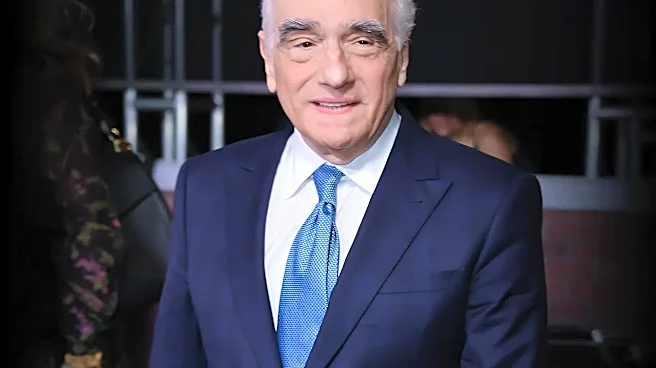
If Howard Beale was driven mad by the system, Rupert Pupkin is driven mad by his desire to get inside it. Martin Scorsese’s unsettling dark comedy features Robert De Niro as an aspiring comedian who will do anything for his shot in the spotlight, including stalking and kidnapping his idol, a late-night host played by Jerry Lewis. The film is a masterful and cringeworthy look at celebrity worship and the delusion that fame is the ultimate validation. It’s less about the media’s corruption and more about the desperate, hollow souls it creates.
Wag the Dog (1997)
What happens when media manipulation and political spin become indistinguishable? A political fixer (Robert De Niro) and a Hollywood producer (Dustin Hoffman) team up to invent a fake war with Albania to distract the public from a presidential sex scandal. Released just a month before the Clinton-Lewinsky scandal broke, this razor-sharp satire from director Barry Levinson felt terrifyingly prophetic. It hilariously and horrifically shows how easily a narrative can be manufactured and sold to a public all too willing to believe what it sees on TV.
Putney Swope (1969)
Robert Downey Sr.’s cult classic is a chaotic and brilliant satire of Madison Avenue. When the sole Black executive (Arnold Johnson) on an advertising firm's board is accidentally elected chairman, he fires most of the white employees, renames the company 'Truth and Soul, Inc.', and starts creating subversive, anti-establishment commercials. The film is a wildly irreverent takedown of corporate hypocrisy, consumerism, and race relations in America, sharing 'Network'’s anarchic spirit and its contempt for institutions that value profit over everything.
Thank You for Smoking (2005)
This film trades TV news for Big Tobacco, but the cynical DNA is the same. Aaron Eckhart is brilliant as Nick Naylor, a charismatic spin doctor whose job is to defend the cigarette industry. Jason Reitman’s directorial debut is a slick, funny, and morally ambiguous look at the art of public relations and manufactured debate. Naylor is a 'Howard Beale' in reverse: instead of screaming the ugly truth, his talent lies in packaging lethal lies as matters of personal choice and liberty.
Death to Smoochy (2002)
Danny DeVito’s dark comedy dives into the rotten core of children’s television. When the corrupt host of a popular kids' show, 'Rainbow' Randolph (Robin Williams), is fired after a bribery scandal, he’s replaced by the squeaky-clean Sheldon Mopes (Edward Norton) and his character, Smoochy the Rhino. What follows is a violent, hilarious, and deeply cynical war for the soul of kids’ entertainment, revealing a world of bribes, backstabbing, and mafia-like corruption. A box office bomb on release, it has since found a cult following for its scathing satire.
Sorry to Bother You (2018)
Boots Riley’s directorial debut is a surreal, audacious, and outrageously funny critique of modern capitalism. A Black telemarketer named Cassius Green (Lakeith Stanfield) discovers he can achieve incredible success by using his 'white voice'. This discovery catapults him into a corporate world more bizarre and sinister than he could ever imagine. The film shares 'Network'’s righteous anger and its willingness to follow a wild premise to its most logical, insane conclusion, creating a satire that feels both of-the-moment and disturbingly timeless.
Nightcrawler (2014)
Perhaps the most direct descendant of 'Network'’s tone, 'Nightcrawler' updates the story for the age of freelance video journalism. Jake Gyllenhaal gives a career-best performance as Louis Bloom, a driven but sociopathic man who discovers he has a knack for filming gruesome accidents and crimes. He begins to orchestrate events to get the most shocking footage possible, which a ratings-hungry local news director eagerly laps up. The film is a chilling look at the adage 'if it bleeds, it leads' and the moral vacuum created by a 24-hour news cycle.
Medium Cool (1969)
Haskell Wexler’s groundbreaking film blends fiction and reality by placing its characters in the middle of the real-life 1968 Democratic National Convention protests in Chicago. It follows a TV news cameraman who discovers his network has been sharing his footage with the FBI. The film is a powerful examination of journalistic objectivity and the role of the media in a time of social upheaval. It questions whether it's possible to simply report on a story when you have become part of it, a theme 'Network' would later explore with explosive results.
Broadcast News (1987)
While more of a romantic dramedy than a furious satire, James L. Brooks' 'Broadcast News' is a brilliant, heartfelt look at the changing ethics of television journalism. It centers on a love triangle between a brilliant, principled producer (Holly Hunter), a talented but difficult reporter (Albert Brooks), and a handsome, charismatic anchor (William Hurt) who represents the triumph of style over substance. The film laments the slow death of integrity in the newsroom, making it a gentler, more melancholic companion piece to 'Network'’s righteous rage.