



The Power of the Shared Moment
For a time, VH1's Hip Hop Honors was more than an awards show; it was a canonization. Debuting in 2004, it was conceived as a corrective to mainstream awards shows that often overlooked hip-hop's foundational architects. This wasn't about anointing the
year's commercial juggernaut. Instead, it was a primetime ceremony dedicated to celebrating the genre's pioneers for their historical significance and cultural impact. Honorees included legends like Run-DMC, Public Enemy, and 2Pac, figures who built the culture from the ground up. The show's power lay in its shared, live format. For a few hours, a national audience experienced the same curated narrative together: emotional acceptance speeches, historical context provided by peers, and powerful tribute performances where new artists paid homage to their heroes. This created a singular, unifying event—a lightning strike of cultural affirmation that declared, authoritatively, that these artists and their contributions mattered profoundly.
The Never-Ending Digital Archive
Contrast that with the modern tribute, which largely lives on YouTube. There is no single night, no shared broadcast. Instead, there is a sprawling, decentralized, and permanent archive. A search for any given artist yields a galaxy of content: fan-made compilations, academic video essays, tearful reaction videos, and intricate supercuts of their best verses. After an artist's passing, this digital space becomes a living wake, a place for collective mourning and celebration that unfolds over months and years. This format is profoundly democratic. Anyone with a laptop and an opinion can contribute to an artist's legacy, adding their own personal narrative to the collective memory. There are no network executives or producers acting as gatekeepers; the barrier to entry is virtually nonexistent. The tribute is no longer a scheduled event but a constant, ever-growing resource available on demand.
Gatekeepers vs. The Algorithm
The trade-off for this democratization lies in the loss of curation and a shared focal point. The producers of Hip Hop Honors acted as cultural arbiters, making deliberate choices about who to honor and how to frame their legacy. While this could be seen as exclusionary, it also provided a coherent, high-quality narrative. It was a statement of value broadcast to millions. In the YouTube era, the primary curator is the algorithm. It serves you content based on engagement, watch history, and a complex web of signals designed to keep you watching. This can lead to deep, personal rabbit holes of discovery, but it also creates filter bubbles. The experience is individualized, not collective. A fan-made documentary might have millions of views, but it doesn't carry the same institutional weight as a network television special. The danger, as media experts note, is the fragility of this digital archive; context can be lost, platforms can disappear, and the loudest voices can drown out more nuanced historical perspectives.
What Makes a Memory Stick?
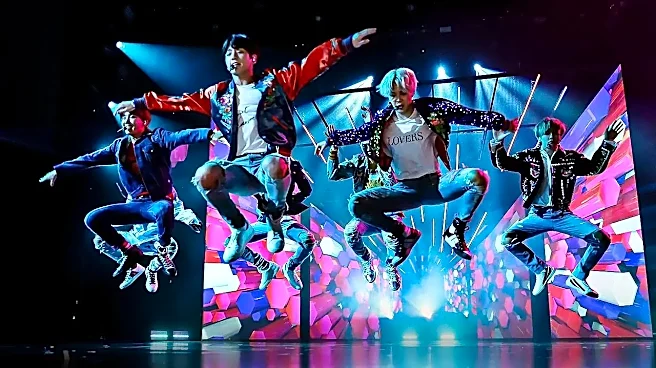
So what does live TV add to cultural memory? It creates moments that are impossible to replicate in a fragmented digital landscape. Think of the iconic tribute performances at the Hip Hop Honors, where a new generation of artists reinterpreted classic songs on a national stage. These weren't just covers; they were public acts of lineage, broadcast to a massive, captive audience. They created indelible memories that entered the collective consciousness. A live broadcast functions as a cultural ceremony, an event that tells a society what stories and people are sacred. YouTube, on the other hand, functions as a library. It is an invaluable resource for research, discovery, and personal connection. You can spend weeks exploring its depths, learning more about an artist than a two-hour special could ever convey. But it rarely forces a national conversation in the same way. One creates a singular, bright memory; the other provides a vast, detailed map.