




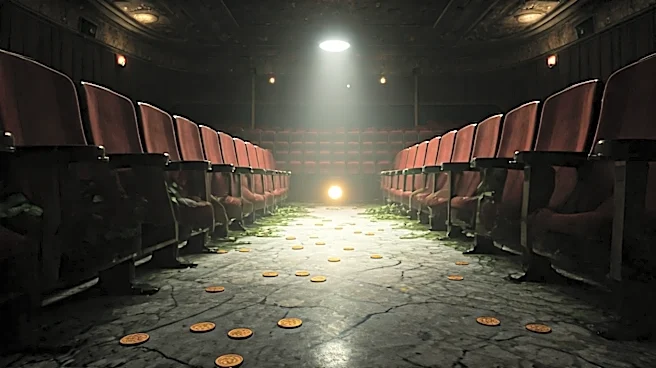

The Three-Act Comfort Zone
First, let's define the enemy. The three-act structure is the bedrock of mainstream Hollywood storytelling. Act One is the setup: we meet our hero and their world, and an inciting incident kicks off the story. Act Two is the confrontation: the hero faces rising obstacles and complications. Act Three is the resolution: a climactic battle is fought, and the conflict is resolved, leaving us with a new normal. Think Star Wars, The Avengers, or pretty much any movie where you can instinctively feel the story building to a big, final payoff. It’s a comfort zone because it’s predictable and deeply satisfying. It delivers what it promises: a clear beginning, a tense middle, and a tidy end. It’s a formula that has printed billions of dollars for a reason—it
works.
Artistic Freedom Over Commercial Mandates
The filmmakers celebrated at Cannes are often playing a different game. Many are financed through a patchwork of national grants, independent producers, and pre-sales, freeing them from the iron grip of a major Hollywood studio. They don't have executives demanding a more sympathetic hero after a bad test screening or a happier ending to ensure a bigger opening weekend. This freedom allows them to prioritize a singular vision over mass-market appeal. If a story about grief feels aimless and looping, the structure can reflect that without a producer insisting it needs more “momentum.” Cannes rewards authorship, and authors don’t always color inside the lines. Directors like Ruben Östlund (Triangle of Sadness) or Julia Ducournau (Titane) use this freedom to build bizarre, shocking, and thematically rich worlds that would likely never survive the traditional studio development process.
When Theme and Mood Dictate Structure
In a three-act film, the plot is king. Every scene serves to move the story forward. But for many memorable Cannes films, theme, mood, or a central philosophical question is the true organizing principle. Terrence Malick's Palme d'Or winner The Tree of Life isn't a story in the conventional sense; it’s a cinematic poem about memory, grace, and nature, flowing between cosmic visuals and whispered memories of a Texas childhood. Its structure is associative and meditative, not linear. Similarly, last year's winner, Anatomy of a Fall, uses a courtroom procedural not to deliver a simple “guilty or not guilty” verdict, but to explore the fundamental impossibility of ever truly knowing another person. The ambiguity of its ending isn't a flaw; it's the entire point. The structure serves the theme of uncertainty.
Making the Audience an Active Participant
Breaking the three-act structure is also a way of respecting the audience’s intelligence. When a film denies you a neat resolution or presents events out of chronological order, it forces you to become an active participant rather than a passive consumer. You have to work to piece together the timeline, debate the character’s motives, and sit with uncomfortable questions. A film with a deliberately slow pace, like many from the Romanian New Wave, asks you to notice the mundane details and feel the weight of time. A fractured narrative, like in many of Gaspar Noé's works, makes you experience the protagonist's disorientation firsthand. This intellectual and emotional engagement is what burns the film into your memory. You’re not just watching a story; you’re wrestling with it.