







From Punk Anarchy to Historical Romance
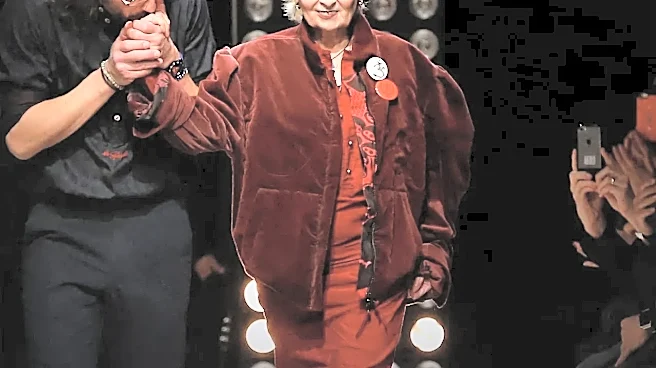
Vivienne Westwood’s journey began on London’s King's Road, where her boutique, under various names like 'SEX' and 'Seditionaries', became the epicenter of the 1970s punk movement. Alongside Malcolm McLaren, she dressed the Sex Pistols in torn shirts,
bondage trousers, and provocative slogans designed to shock the establishment. But as punk’s initial blast faded, Westwood’s intellectual curiosity deepened. She grew tired of pure nihilism and turned her gaze to history, not as a source of dusty reverence, but as a treasure chest of ideas to be plundered. This pivot was announced with her first-ever runway show in 1981, aptly titled 'Pirate'. The collection swapped safety pins for swashbuckling romance, featuring billowing shirts, buccaneer boots, and asymmetrical cuts inspired by 17th-century menswear. It was a radical departure that signaled a new direction: Westwood was no longer just rebelling against the system; she was building a new world from the fragments of the old one. This 'New Romantic' look was a deliberate move away from punk's starkness, offering color and fantasy as a new form of rebellion.
Reclaiming the Corset as Armor
Perhaps no garment better illustrates Westwood's philosophy than the corset. For centuries, it was a symbol of female constraint, a patriarchal tool designed to mold a woman's body into an idealized, often painful, shape. Westwood saw it differently. Starting in the late 1980s with collections like 'Harris Tweed', she took the corset from a hidden undergarment and placed it front and center as powerful outerwear. Her corsets, often printed with Rococo artworks from artists like François Boucher, were not about restriction but liberation. By using modern materials like stretch lycra and side zippers, she made them comfortable and gave the wearer control. The act of wearing a Westwood corset became a statement of sexual freedom and empowerment. She transformed an instrument of oppression into a piece of armor, a way for women to frame their own femininity and power, turning history on its head.
Anglomania and the Subversion of Class
As her career progressed, Westwood turned her attention to the very heart of the British establishment: its traditional textiles and tailoring. In collections like 'Harris Tweed' (1987) and 'Anglomania' (1993), she embraced the fabrics of the upper class—stuffy tweeds, Savile Row suiting, and, most famously, tartan. But she didn't just replicate them; she parodied them. She took tartan, a fabric loaded with historical and clan significance, and clashed patterns, cut it on the bias, and fashioned it into exaggerated silhouettes that were more punk than palace. She even designed her own tartan, the 'MacAndreas', named for her husband and design partner, Andreas Kronthaler. This was a subtle but profound form of rebellion. By taking the symbols of aristocracy and the British Empire and making them eccentric, sexy, and cool, she stripped them of their exclusionary power. She proved that heritage wasn't something to be blindly obeyed but a language that could be learned, dismantled, and rewritten with a wink.