

The Unfathomable Talent Pipeline
First, you have to talk about the depth. It’s almost unfair. While other nations pray their star player stays healthy, France could likely field three separate, tournament-competitive teams. This isn't an accident; it’s the result of a world-class development
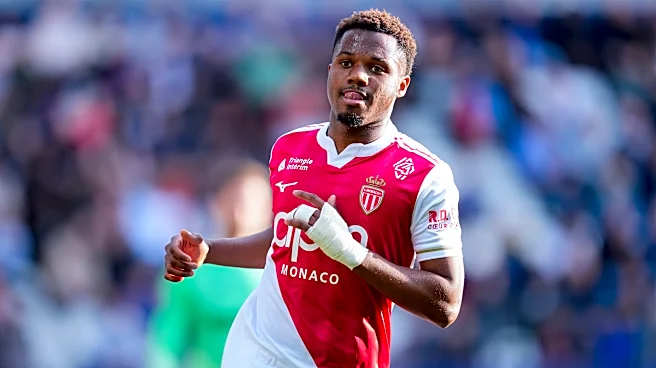
system that’s been humming for decades. The crown jewel is the Clairefontaine National Football Centre, an elite academy that has produced legends like Thierry Henry, Nicolas Anelka, and Kylian Mbappé. But it's more than just one institution. Professional club academies across France, from Lyon to Monaco, are churning out technically gifted, physically imposing athletes. The result is a constant, almost overwhelming, supply of talent. When a star like Karim Benzema gets injured just before the 2022 World Cup, they simply plug in a World Cup-winning veteran like Olivier Giroud, who goes on to become the country's all-time leading scorer. It’s a luxury no other country truly has.
A Melting Pot of Modern Athletes
The French national team is a vibrant reflection of modern France, and it’s one of its greatest strengths. The team's engine is powered by players from the *banlieues*, the diverse suburbs surrounding major cities like Paris and Marseille. These communities, often home to families with roots in Africa and the Caribbean, are fervent crucibles of street soccer, where technical flair and fierce competitiveness are honed on concrete pitches. This fusion creates a unique athletic profile. France doesn’t just produce one type of player. They have the raw speed and power of Mbappé, the tireless defensive work rate of N'Golo Kanté, the creative genius of Antoine Griezmann, and the rock-solid defensive presence of players like Dayot Upamecano. This blend of styles and physical attributes, drawn from every corner of French society, makes them incredibly difficult for opponents to scout and contain. They can win with grace, with grit, or with sheer athleticism.
Pragmatism Over Philosophy
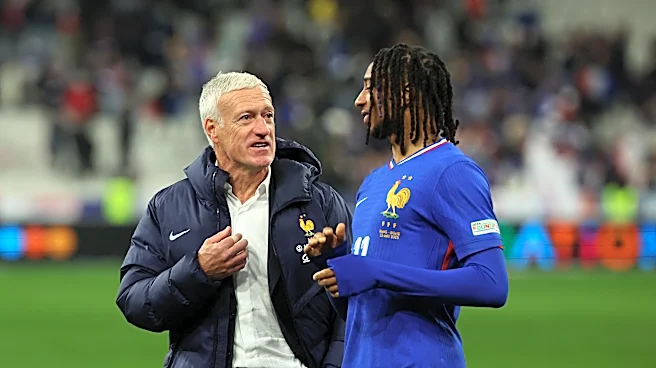
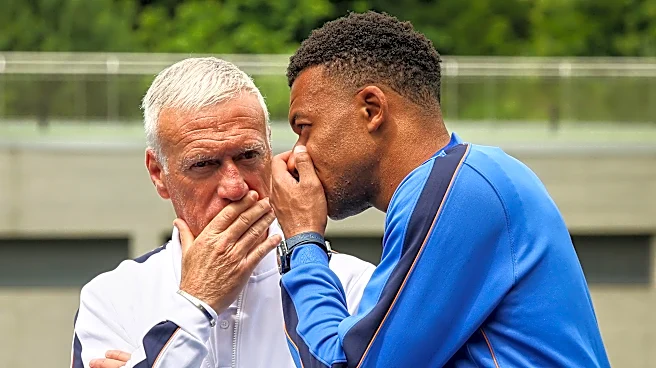
Many of soccer’s great nations are defined by a rigid philosophy—Brazil’s *joga bonito*, Spain’s tiki-taka, Germany’s efficient machine. France, under manager Didier Deschamps, has something different: ruthless pragmatism. Deschamps, who captained France to its first World Cup win in 1998 and coached them to victory in 2018, is not an idealist. He's a winner. His teams are often criticized by purists for not being more adventurous or aesthetically pleasing, but they are masters of tournament football. He assesses his incredible pool of talent and builds a system that is, above all, balanced and difficult to beat. He prioritizes defensive solidity and trusts his superstar attackers to produce moments of individual magic to win games. While other teams get bogged down trying to execute a perfect, dogmatic style, Deschamps adapts. He’s willing to sit back, absorb pressure, and hit on the counter-attack, a style perfectly suited for the high-stakes, low-margin-for-error knockout stages of a World Cup.
Big-Game Experience and Mentality
Finally, the French squad is packed with players who play their club soccer at the highest possible level. Look at the rosters from their 2018 and 2022 runs; they are a who's who of Real Madrid, Paris Saint-Germain, Bayern Munich, and top Premier League clubs. These players aren't just talented; they are seasoned professionals accustomed to the immense pressure of Champions League finals and do-or-die league title races. When the lights are brightest on the World Cup stage, they don’t shrink. They have been there before. This creates a powerful self-reinforcing culture of excellence. Younger players come into a squad with a core group that has already won the ultimate prize. They learn from veterans who know what it takes to navigate the intense, month-long bubble of a major tournament. That championship DNA, forged in 2018 and tested again in 2022, gives them a psychological edge that is almost as formidable as their talent.